“Gender and sexuality studies is social theory made accessible,” said Lora Wildenthal, the John Antony Weir Professor of History and director of Rice’...
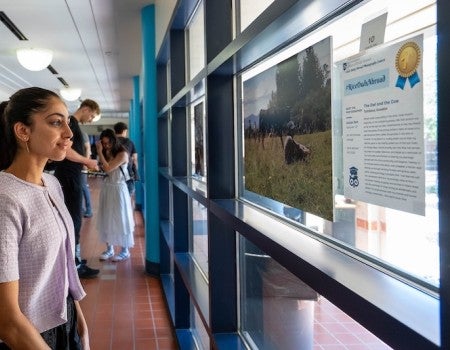
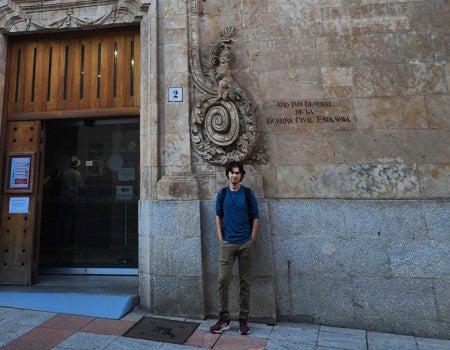
The global journeys of Rice University students were on display March 27 as the Office of Study Abroad hosted the 2026 Study Abroad Photo Contest Exhi...
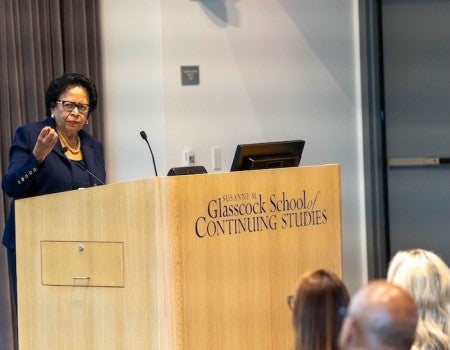
The Center for Philanthropy and Nonprofit Leadership at Rice’s Susanne M. Glasscock School of Continuing Studies welcomed nonprofit leaders from acros...
The Olivier Award-nominated play traces the rise and fall of the Houston-based energy trading giant, translating complex financial systems into a fast...
New consumable hemp rules from the Texas Department of State Health Services are officially in effect, and the biggest change comes down to how THC is...
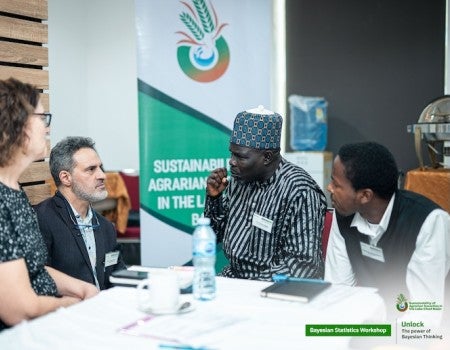
For more than a decade, Rice’s Frederi Viens has been studying Lake Chad, a vast freshwater lake in west-central Africa that borders Nigeria, Niger, C...
The Center for Energy Studies at Rice’s Baker Institute for Public Policy and the University of Houston Energy Transition Institute are launching a st...
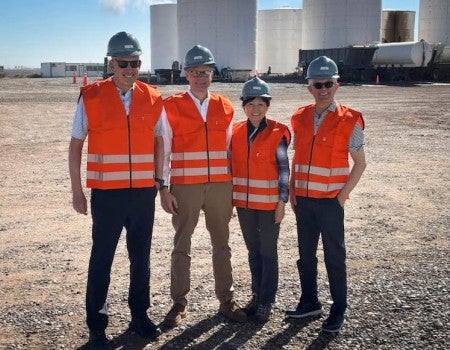
A delegation of researchers from Rice’s WaTER Institute traveled to Argentina’s Neuquén province this month to help address a pressing question facing...
Rice’s open enrollment period for employee benefit plans will run from April 3-17. To give employees a way to better explore their benefits options, t...
Rice's Office of Sustainability invites the campus community to join the third annual Earth Month Kick-Off Festival from 12:30-3:30 p.m. April 1 at th...
Rice continues to strengthen its position as a leader in innovation, rising to No. 66 in the 2025 Top 100 U.S. Universities List for utility patents, ...
Rice University scientists show that "cool" stars like the sun share dynamic surface behaviors that influence their energetic and magnetic environments. Stellar magnetic activity is key to whether a given star can host planets that support life.
Rice University carbon materials expert Matteo Pasquali is available to discuss ways to slash carbon dioxide emissions and rapidly decarbonize the global economy.
Both sustainability practices and a circular economy can help maximize the world’s resources, but the ideas are not interchangeable, according to a new brief from Rice's Baker Institute for Public Policy.
Paul Padley, a professor of physics and astronomy and director of the Bonner Nuclear Laboratory, has been named Rice’s interim vice president for information technology and chief information officer.
HOUSTON – (Aug. 3, 2021) – Iran’s groundwater depletion and food security crisis is an issue of global importance reflecting not only climate change, but also a pattern of policy mismanagement, according to an expert from Rice University’s Baker Institute for Public Policy.
Rice University has won a Phase I National Science Foundation grant to establish the NSF Center for Adapting Flaws into Features to investigate nanoscale chemical phenomena and optimize the structures and electronic properties of materials.
Researchers identify redundant neural networks in jellyfish-like, freshwater hydra. The work is a step toward modeling how internal states and external stimuli shape the behavior of an organism with a highly dynamic neural architecture.
Ken Wolpin, the retired Lay Family Professor of Economics at Rice University and former department chair whose work revolutionized the field of labor economics, is this year's recipient of the Jacob Mincer Award for lifetime contributions to the discipline.