
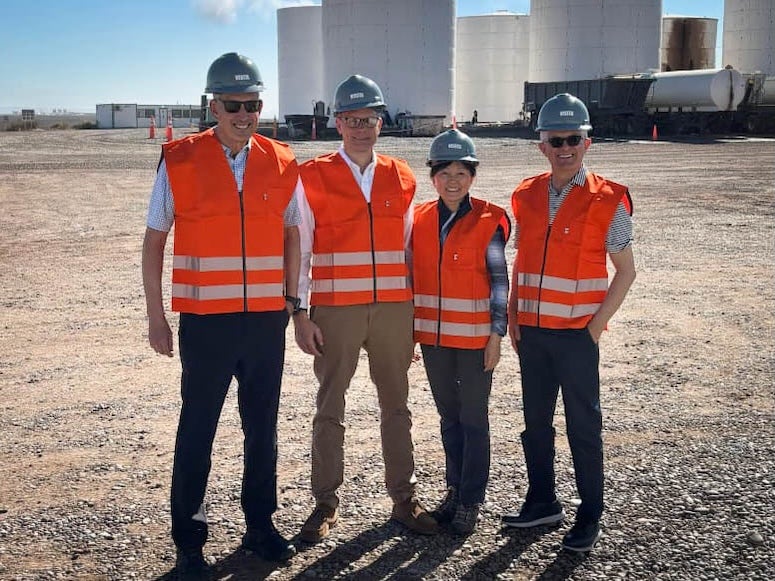
A delegation of researchers from Rice University’s WaTER Institute traveled to Argentina’s Neuquén province this month to help address a pressing question facing one of the world’s fastest-growing energy regions: how to balance rapid oil and gas development with long-term environmental sustainability.
At the center of the discussion is Vaca Muerta, a vast shale formation spanning roughly 30,000 square kilometers in the Neuquén Basin. Widely considered one of the most significant unconventional oil and gas resources globally, Vaca Muerta has become critical to Argentina’s energy independence and a focal point for international investment. But its rapid expansion is also bringing new environmental pressures — particularly around water use, wastewater management and land impacts.
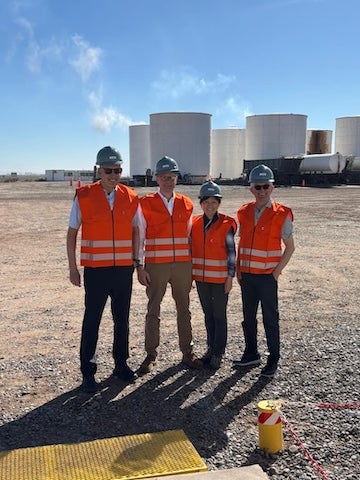
Those challenges framed a March 19 technical conference at the Neuquén Scientific and Technological Center, co-organized by Instituto Argentino del Petróleo y del Gas, Polo Cientifico Tecnologico and technological center CIATI. The event convened international experts, policymakers and industry leaders to explore strategies for responsible development of unconventional hydrocarbon resources. The Rice experts also attended a one-day field tour of the oil and gas operations at Vaca Muerta prior to the conference.
Rice experts joined collaborators to share insights drawn from U.S. shale development and global energy systems. Rice’s contingent included Eric Willman, executive director of the Rice WaTER Institute; Pedro Alvarez, director of the Rice WaTER Institute and the George R. Brown Professor of Civil and Environmental Engineering; Menachem Elimelech, the Nancy and Clint Carlson Professor of Civil and Environmental Engineering and Chemical and Biomolecular Engineering; and Qilin Li, the Karl F. Hasselmann Professor of Civil and Environmental Engineering. Mason Tomson, professor of civil and environmental engineering, participated in the symposium virtually. Their message was consistent: Sustainability must be embedded from the outset, not treated as an afterthought.
“Vaca Muerta represents a tremendous opportunity, but without careful planning, the scale of operations can quickly outpace the region’s ability to manage water and waste,” Willman said.
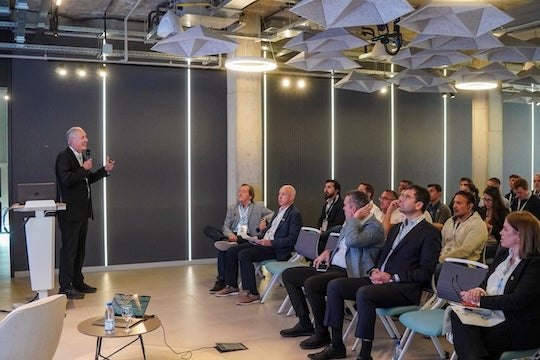
A central focus of the discussions was the treatment and reuse of “produced water” and flowback fluids, which are large volumes of water that return to the surface after hydraulic fracturing. Presenters highlighted advanced treatment technologies, water recycling systems and mineral recovery approaches that can reduce environmental impact while improving operational efficiency.
Beyond water, the group also addressed soil degradation and ecosystem disruption linked to expanding infrastructure. Strategies such as bioremediation — using biological processes to clean up contamination — were presented as promising tools for restoring impacted land while supporting continued development.
Throughout the conference, participants underscored the importance of collaboration among industry, academia and government. Building a sustainable energy future for Vaca Muerta, they noted, will depend not only on technological innovation but also on coordinated policy and shared responsibility across sectors.
The visit reflects Rice’s broader engagement in global energy and water challenges, particularly in regions where resource development and environmental stewardship are tightly intertwined.
“As Vaca Muerta continues its rapid rise on the global energy stage, its long-term success will require striking a balance between harnessing its vast potential while protecting the natural systems that sustain it,” Willman said.