Religious expression in the workplace — from wearing symbols of one’s beliefs to discussing faith at work — varies from geographic location to location, with Christians more likely to express their faith in the South, Jews most likely in the Northeast and Muslims most likely to do so out West, according to a new paper from researchers at Rice University’s Boniuk Institute and its Religion and Public Life Program, Purdue University, West Virginia University and Wheaton College.
The Renewable Energy Alliance – Houston (REAL) will present its Second Annual Renewable Energy Leadership Conference at Rice University to explore the impact of the Inflation Reduction Act (IRA) signed one year ago.
Rice U. bioengineers developed a platform that enhances survival and function of probiotics engineered to diagnose inflammatory bowel disease in animals. The technology holds promise for minimally invasive disease monitoring and advanced smart therapeutics.
The first 12 chapters of the textbook Organic Chemistry: A Tenth Edition are now freely accessible to students through OpenStax, an educational initiative of Rice University. On Sept. 12, students and faculty will have free access online to the full version of this historically costly textbook that is a required material for organic chemistry courses nationwide.
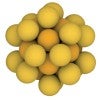
Rice chemists have discovered that tiny gold “seed” particles, a key ingredient in one of the most common nanoparticle recipes, are one and the same as gold buckyballs, 32-atom spheres that are cousins of the Nobel Prize-winning carbon buckyballs discovered at Rice in 1985.
Rice bioengineer Caleb Bashor and colleagues have developed a generalizable method to address “off-target” gene activation, a significant problem in the field of synthetic biology. Taking a cue from nature, the researchers showed they could all but eliminate the activation of off-target genes by designing weak transcription factors that cooperatively assemble.
Jing Chen, an assistant professor of psychological sciences at Rice University specializing in human factors and human-computer interaction, has received the Earl Alluisi Early Career Achievement Award from the American Psychological Association (APA), the world’s largest association of psychologists.
Rice University will kick off its annual O-Week tradition Aug. 13, welcoming the incoming Class of 2027 with a weeklong orientation program to familiarize incoming students with their new campus, residential colleges and classmates.
Rice U.’s Carolyn Nichol has won a competitive 5-year, $1,038,544 NIH Science Education Partnership Award (SEPA) award to address race-based cancer health disparities by increasing underrepresented minority student populations’ engagement and participation in biosciences education.
Three former U.S. Secretaries of State will join a moderated discussion on geopolitics, foreign affairs and public service at the 30th anniversary gala celebrating Rice University’s Baker Institute for Public Policy Oct. 26.
Price increases were the largest source of spending per visit in emergency rooms over the past decade in four of five states studied, according to a new report from researchers at Rice University and UTHealth Houston School of Public Health.
A $6.25 million National Institutes of Health grant supports Rice U. engineers optimizing a neural probe array that can record the activity of spinal cord neurons as bodies move and behave. Scientists would also develop an integrated data-processing and stimulation-feedback system.
Rice University scientists have found that a boron nitride nanocomposite interacts with light and heat in unexpected ways that could be useful for advanced technology applications.
Violent conflicts around the world have driven more people from their home countries than ever before. As these individuals and families seek safe havens, new research from Rice University has found that refugee children are up to three times more likely to be poor than adults – even within their own families.