For those suffering from rib flaring associated with congenital deformations of the chest wall that cause it to jut out or cave in, a team of Rice University engineering students has come up with a potential solution.
A wearable electrical-stimulation and vibration-therapy system designed by Rice University engineering students might be just what the doctor ordered for people experiencing foot pain and balance loss due to diabetic neuropathy.
Vice President for Global Caroline Levander, Provost Amy Dittmar and President Reginald DesRoches gave an update on the Rice Global Paris Center in an April 11 email to the university community.
A panel of energy industry experts will discuss OPEC+ moving to cut production and other factors that will determine the global oil market’s future in an April 18 event at Rice University’s Baker Institute for Public Policy.
Rice University will host its annual appreciation event to celebrate staff accomplishments on April 21 at 9:30 a.m. at Rice Memorial Center’s Grand Hall.
Rice University’s Shepherd School Contemporary Ensemble and Symphony Orchestra will wrap up their 2022-2023 performing seasons with concerts on April 19 and 21, respectively. Both concerts will take place at 7:30 p.m. in Stude Concert Hall.
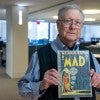
A generous donation of vintage comics from Rice University alumnus Dr. Gordon Green ‘62 was recently made to the Comic Art Teaching and Study (CATS) Workshop in the Woodson Research Center at Fondren Library.
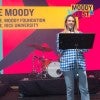
Rice University Owls gathered in celebration of the Moody Foundation’s historic $100 million gift to the campus. More than 1,000 students flooded Tudor Fieldhouse April 7 for Moody X-Fest ’23, the signature event of the inaugural Moody Experience celebrations.
Steven Murdock, founding director of Rice University’s Hobby Center for the Study of Texas who served as director of the U.S. Census Bureau and state demographer of Texas, died April 7. He was 75.
Rice Theatre’s “Small Mouth Sounds”— a play entirely produced, staffed and performed by this year’s senior cohort, a first in the program’s history — is set for April 14-16 at Hamman Hall.
Rice University alumnus and professor emeritus Arthur Allen Few Jr. died Dec. 3, 2022, at his home in Gold Hill, Colorado, after a long struggle with Parkinson’s disease and related medical issues. He was 83.
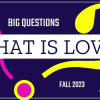
This fall, Rice professors Sonia Ryang and Ilana Gershon will ask Rice students a far-from-simple question — What is Love? — in their upcoming course of the same name, the latest offering in the Big Questions class series sponsored by the School of Humanities.