Despite having one of the largest urban park systems in the country and one of the highest levels of philanthropic support of parks, Houston falls behind other major cities in funding them — and a majority of residents say they are willing to spend more to elevate the city’s investment, a new study by the Kinder Institute for Urban Research at Rice University has found.
Rice computer scientists have won two grants from the National Science Foundation to explore new information processing technologies and applications that combine co-designed hardware and software to allow for more effective and efficient data stream analysis using pattern matching.
A battery recycling process developed by Rice scientists can retrieve valuable metals from mixed cathode and anode waste with a yield exceeding 98% in less time than normal using low-concentration acid, reducing both the cost and negative environmental impact.
A five-year, $3.9 million grant from the National Institutes of Health will help establish a joint Baylor College of Medicine/Rice University center to support the development and testing of new genome editing technologies.
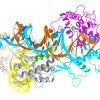
Rice scientists mapped out the three-dimensional structure of one of the smallest known CRISPR-Cas13 systems then used that knowledge to modify its structure and improve its accuracy.
The Advanced Research Projects Agency for Health has awarded a Rice-led team $45 million to rapidly develop an implant with sense-and-respond technology that could slash U.S. cancer-related deaths by more than 50%.
Rice University President Reginald DesRoches announced the creation of a $1 million scholarship named after Ruth Simmons, a President’s Distinguished Fellow and higher education trailblazer.
Rice graduate students Aindrila Pal and Gregory Szypko have won NASA FINESST Awards, merit-based future investigator awards that include three-year grants to conduct research in Earth and space sciences.
Rice University trustee Terrence Gee and family have donated $1 million to the university to help establish the Dr. Anthony B. Pinn Postdoctoral Fellowship in the Center for African and African American Studies.
To make a gene-editing tool more precise and easier to control, Rice University engineers split it into two pieces that only come back together when a third molecule is added.
Two Rice University scientists have won a 3-year grant from the Department of Energy to study clay mineral formation processes in a watershed in order to develop a model of how soils store carbon as organic matter.
The Rice Owls completed their first city sweep in football after a convincing 59-7 victory over Texas Southern University at Rice Stadium Sept. 16, one week after topping the University of Houston.
Mechanical Engineering’s Daniel Preston, three graduate students and a postdoctoral fellow have won a 2023 Ig Nobel Prize for their “necrobotic” robot arm that incorporated a dead spider.