

The Ralph S. O’Connor building for Engineering and Science was officially inaugurated yesterday with a ceremony commemorating the late Rice University trustee whose generosity helped make it a reality.
The Ralph S. O’Connor building for Engineering and Science was officially inaugurated yesterday with a ceremony commemorating the late Rice University trustee whose generosity helped make it a reality.

Making hydrogen from waste plastic could pay for itself
Rice University researchers have found a way to harvest hydrogen from plastic waste using a low-emissions method that generates graphene as a by-product, which could help offset production costs.

Rice President Reginald DesRoches and Texas Medical Center President and CEO Bill McKeon joined other university leaders Sept. 12 at a ceremony that simultaneously marked the start of the Rice Biotech Launch Pad and the 61st anniversary of President John F. Kennedy’s 1962 speech at Rice Stadium announcing the Apollo moonshot program.

Rice University today introduced the Rice Biotech Launch Pad, a Houston-based accelerator focused on expediting the translation of the university’s health and medical technology discoveries into cures.
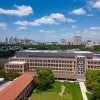
Ralph S. O’Connor building dedication ceremony to be held Sept. 14
On Thursday, Sept.14, Rice inaugurates a new, state-of-the-art engineering and science research facility with a dedication ceremony to Ralph S. O’Connor.

Owls capture Bayou Bucket after captivating overtime shootout
The Bayou Bucket trophy is headed back to South Main for the first time since 2010.

Antidepressants may reduce negative memories while improving overall memory, according to Rice study
New research from Rice University finds that antidepressants may actually reduce negative memories in individuals suffering from depression while improving overall memory function.

You can leave your gloves on: Rice-developed material burns viruses, safe for skin
A new material that packs deadly heat for viruses on its outer surface while staying cool on the reverse side could be used to make sustainable, multiuse personal protective equipment. Marquise Bell, a Rice graduate student who is the lead author of the research, was also part of this year’s NextProf Nexus workshop, a national, competitive faculty development program for engineering students from underrepresented groups.

Rice helps lead national quantum computing research efforts
A team of Rice University researchers have won a 4-year, $1.2 million grant from the Department of Energy to evaluate the strengths and limitations of different physical systems used to build quantum computers and inform strategies for achieving near-term advances in quantum computing.

Rice names new head of digital learning and strategy
Shawn Miller will join Rice as associate provost for digital learning and strategy , effective Nov. 1, reporting directly to the provost.

New NSF grant to fund study of how AI affects hiring process
Can artificial intelligence (AI) select job candidates as well — or better — than traditional methods? A new, four-year study from the National Science Foundation seeks to find out.

Rice’s Center for Research Computing receives top award for data visualization for SlaveVoyages
John Mulligan, a humanities computing researcher and facilitator in Rice University’s Center for Research Computing (CRC), was awarded first place in the data visualization category at the Practice and Experience in Advanced Research Computing (PEARC) conference for work with Rice’s SlaveVoyages.

Rice’s Shepherd School of Music announces 2023-24 season
HOUSTON – (Aug. 31, 2023) – For the first time in the Shepherd School of Music’s history, a comprehensive listing of key performances is being announced today to coincide with the release of a new season brochure and redesigned events website. The Shepherd School has collected guest artists from around the globe to perform and teach this season, joining the existing ranks of renowned artists already among the faculty.

Ostherr receives NEH grant to explore computational health through humanities lens
Kirsten Ostherr, the Gladys Louise Fox Professor of English and director of the new Medical Humanities Research Institute at Rice, received a grant from the National Endowment for the Humanities (NEH) to advance her work on the role of visual representation in the history of computational health.
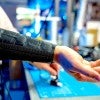
Smart fabrics’ informed touch can tell you where to go
Rice U. engineers developed a lightweight, wearable textile-based device that can deliver complex haptic cues, enabling a user to perform open-world navigation tasks. The device is resilient to regular daily use, withstanding multiple cycles of washing and other damage and repair without loss of function.