

Evelyn Tang, an assistant professor of physics and astronomy and a member of Rice University’s Center for Theoretical Biological Physics, has won a prestigious National Science Foundation CAREER Award.
Evelyn Tang, an assistant professor of physics and astronomy and a member of Rice University’s Center for Theoretical Biological Physics, has won a prestigious National Science Foundation CAREER Award.

HIV ‘drug factory’ implant promises once-a-year therapy
A Rice University lab is developing encapsulated cellular “drug factories” to treat patients with HIV through a once-a-year implant.

IEEE honors Kavraki, Richards-Kortum, Truchard
Two renowned Rice University professors and a longtime backer have won prestigious honors in the 2023 IEEE Awards.

Tropical wildlife follow the same daily patterns worldwide
A massive study of rainforest species across three regions of the world finds striking similarities in how animals spend their days.
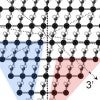
A crystal shape conundrum is finally solved
Rice researchers learn to predict how crystals take shape from their internal chemistry, even when the crystal lacks symmetry.

Rice lab’s catalyst could be key for hydrogen economy
A light-activated catalyst efficiently converts ammonia into clean-burning hydrogen using only inexpensive raw materials.

Brain cancer research draws support
Bioengineer Kevin McHugh wins a Distinguished Scientist Award for brain cancer research from The Sontag Foundation.

Get into the holiday mood with Rice Shepherd School’s ‘Spirit of the Season’ Dec. 3
Put on your holiday cheer and head over to Rice University’s Shepherd School of Music on Saturday, Dec. 3 for a spirited celebration.
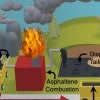
Rice turns asphaltene into graphene for composites
The flash Joule heating process developed at Rice turns asphaltenes, a byproduct of crude oil production, into graphene for use in composite materials.
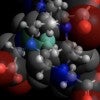
Rice refines analysis of MRI contrast agents
Simulations reveal details about the magnetic interactions between gadolinium contrast agents used in MRI scans and their environment.

Businesses backing #BlackLivesMatter are more attractive to workers, have better bottom lines
Businesses that offer public declarations of support for the Black community after violent events like the murder of George Floyd and other serious incidents are more attractive to prospective employees and have bigger bottom lines, according to new research from Rice University.

Mental and physical health support tops the list of Houston Independent School District student and parent needs, according to a new survey from Rice University Kinder Institute’s Houston Education Research Consortium.
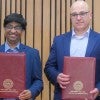
Rice, Indian Institute of Technology Kanpur commit to cooperate on research
Rice and the Indian Institute of Technology Kanpur sign a three-year cooperation agreement to collaborate on issues critical to the United States, India and the globe.

Cool respite with a conscience
Rice faculty members have installed “Building Ecologies” at Post Houston to demonstrate a “circular” strategy that incorporates environmental systems into architecture.

Rice bioengineer seeks better signals from cells
Jerzy Szablowski earns NIH support to research noninvasive reporters that monitor gene therapy in the brain.