Widowed individuals experiencing intense grief after the loss of their spouse experience a significant increase in body inflammation following other stressful events, according to new research from Rice University.
A new study suggests parents accustomed to home schooling felt more resilient during the COVID-19 pandemic than those whose public-school children were suddenly housebound, especially when the latter parents did not meet recommendations for physical activity.
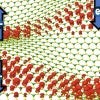
Rice University materials theorists model a contoured surface overlaid with 2D materials and find it possible to control their electronic and magnetic properties. The discovery could simplify research into many-body effects, including quantum systems.
Disbanding city police departments and shifting law enforcement responsibilities to county governments appears to have no affect on overall crime rates and leads to fewer police-related deaths, according to new Rice University research. But the same study indicates those communities may be less likely to report their crime statistics to the FBI.
Cymene Howe, a professor of anthropology at Rice University and director of graduate studies in the Department of Anthropology, has been named a Berlin Prize fellow by the American Academy in Berlin.
Many of the nation’s most prominent hospitals are blatantly violating federal mandates requiring transparency in pricing, and all too often patients are being kept in the dark about dramatic differences between publicly reported prices for services and their actual cost, according to a new report from Rice University’s Baker Institute for Public Policy.
Rice University chemists, working with the Ford Motor Company, processes waste plastic from end-of-life trucks into graphene for composite materials in new vehicles.
A theoretical framework by Rice University scientists shows how to increase the odds of identifying cancer-causing mutations before tumors take hold. They demonstrate that only a few energetically favorable pathways are likely to lead to cancer.