Taiyun Chi, an assistant professor of electrical and computer engineering at Rice University, has won a prestigious National Science Foundation CAREER Award to research the development of a high-performance neural interface and a noninvasive deep-brain-stimulation system.
A new approach to the study of amyloid-beta, a peptide associated with Alzheimer’s disease, has led Rice University scientists to findings that could have a significant impact on the understanding and potential treatment of the disease.
Rice chemist Han Xiao and Stanford researcher Zhen Cheng have developed a tool for noninvasive brain imaging that can help illuminate hard-to-access structures and processes. Their small-molecule dye is the first of its kind that can cross the blood-brain barrier, allowing researchers to differentiate between healthy brain tissue and a glioblastoma tumor in mice.
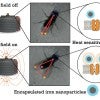
Rice University bioengineer Jerzy Szablowski has won a prestigious DARPA Young Faculty Award to identify nongenetic drugs that can temporarily enhance the human body’s resilience to extreme cold exposure.
Rice and Houston Methodist have awarded seed grants for research in robotics, imaging, cardiovascular bioengineering, and psychological and behavioral health.
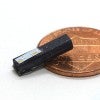
A wireless neurostimulator a little bigger than a grain of rice can be put in place alongside blood vessels to treat neurological diseases and chronic pain.
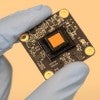
The lensless Bio-FlatScope is a small, inexpensive camera to monitor biological activity that can’t be captured by conventional instruments. The device could eventually be used to look for signs of cancer or sepsis or become a valuable endoscopy tool.
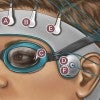
Robotics expert Marcia O’Malley, associate dean for research and innovation in Rice’s Brown School of Engineering, co-authored a retrospective in this week’s Science Robotics about the past decade's advances in medical robotics.