Body
Body
Shield
Rice University News and Media Relations Office of Public Affairs

Main Nav

Neuroengineering

jellyfish-like, freshwater hydra

How headless hydra feel, react to prodding

August 2, 2021

Researchers identify redundant neural networks in jellyfish-like, freshwater hydra. The work is a step toward modeling how internal states and external stimuli shape the behavior of an organism with a highly dynamic neural architecture.

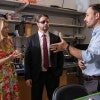
Jacob Robinson, associate professor of electrical and computer engineering and a core faculty member of Rice's Neuroengineering Initiative, discussed research with U.S. Rep. Dan Crenshaw (middle) and his wife, Tara Crenshaw(left), during a tour of neuroengineering research laboratories following Rep. Crenshaw's third annual Healthcare Innovation Summit July 23 at Rice's BioScience Research Collaborative.

Rep. Dan Crenshaw hosts health care summit, tours neuroengineering labs

July 26, 2021

U.S. Rep. Dan Crenshaw (left), R-Texas, hosted his third annual Healthcare Innovation Summit July 23 at Rice University's BioScience Research Collaborative (BRC) in conjunction with the university's Institute of Biosciences and Bioengineering.

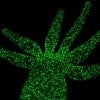
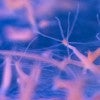
Freshwater Hydra vulgaris, this one modified with green fluorescent proteins, is the focus of a study at Rice University that aims to define the connections between neurons and muscles that drive programmed behaviors in living animals. (Credit: Robinson Lab/Rice University)

Keck backs Rice bid to ‘build a brain’

June 28, 2021

A $1 million Keck Foundation grant will support work by Jacob Robinson to understand neural pathways.

Implant

Timing is everything in new implant tech

May 10, 2021

Rice engineers' wireless implants now allow for multiple stimulators to be programmed and magnetically powered from a single transmitter.

Artist's impression doctor cradling a brain-shaped array of lighted nodes

Houston Methodist, Rice U. launch neuroprosthetic collaboration

April 6, 2021

Rice and Houston Methodist are partnering to solve clinical problems with neurorobotics at the new Center for Translational Neural Prosthetics and Interfaces, a collaboration that brings together scientists, clinicians, engineers and surgeons.

Moana

Brain-to-brain communication demo receives DARPA funding

January 25, 2021

Wireless linkage of brains may soon go to human testing with $8 million for preclinical demonstrations.

comparison of large in tact tissue section and thinly sliced tissue

AI-powered microscope could check cancer margins in minutes

December 17, 2020

Researchers from Rice University and MD Anderson Cancer Center have created a microscope that uses artificial intelligence to quickly and inexpensively image large tissue sections at high resolution with minimal preparation. If clinically validated, the DeepDOF microscope could allow surgeons to inspect tumor margins within minutes.

Films made of highly aligned nanotubes like those developed at Rice in 2016 will be part of advanced tissue imaging systems. (Credit: Jeff Fitlow/Rice University)

Rice physicist shares grant to advance imaging

December 3, 2020

The lab of physicist Junichiro Kono will share in a $1 million grant from the Chan Zuckerberg Initiative to improve imaging of proteins, cells and tissues.

An illustration of the method for inferring thoughts within patterns of brain activity, based on observing behavior.

AI helps scientists understand brain activity behind thoughts

November 24, 2020

Researchers from Baylor College of Medicine and Rice University have developed artificial intelligence models that help them better understand the brain computations that underlie thoughts.

The National Institutes of Health is backing a Rice University project to continue the development of flexible nanoelectronic thread to gather information from neurons. The miniaturized implants could ultimately help find therapies for neurological disorders. (Credit: Xie Laboratory/Rice University)

Gentle probes could enable massive brain data collection

September 14, 2020

The National Institutes of Health is backing a Rice project to continue the development of flexible nanoelectronic thread to gather information from neurons. The implants could help find therapies for neurological disorders.

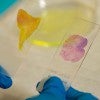
Someone micro-pipetting liquid into a test tube

Three research teams earn Dunn Awards

September 4, 2020

Three teams of Rice University and Baylor College of Medicine researchers have been named winners of the 2020 John S. Dunn Collaborative Research Awards.

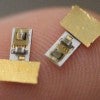
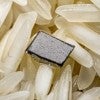
A sample of Rice University's "magnetoelectric" film atop a bed of uncooked rice. Rice neuroengineers created the bi-layered film to power implantable neural stimulators that are approximately the size of a grain of rice. The film converts energy from a magnetic field directly into an electrical voltage, eliminating the need for a battery or wired power connection. (Photo by Jeff Fitlow/Rice University)

Rice team makes tiny, magnetically powered neural stimulator

June 8, 2020

Rice University neuroengineers have created a tiny surgical implant that can electrically stimulate the brain and nervous system without using a battery or wired power supply.

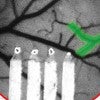
Rice neurobiologists show that increased blood flow to the brain is not an accurate indicator of neuronal recovery after a microscopic stroke. The researchers created a custom implant that combines the ability to simultaneously monitor both blood flow and brain activity. (Credit: Luan Laboratory/Rice University)

Blood flow recovers faster than brain in micro strokes

May 22, 2020

Work by a Rice neurobiologist shows that increased blood flow to the brain is not an accurate indicator of neuronal recovery after a microscopic stroke.

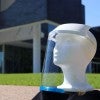
A prototype face shield produced as part of a joint effort by the Rice Center for Engineering Leadership and Rice's Moody Center for the Arts. (Photo by Jeff Fitlow/Rice University)

Rice reacts to critical shortage of COVID-19 protective gear

April 27, 2020

Rice is responding to the critical shortage of COVID-19 protective gear with creativity, generosity and tenacity.

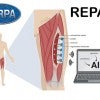
Illustration showing how REPAIR, a smart electronic patch, will help regrow muscle tissue

'Smart' wound-healing patch: DARPA awards $22 million grant

March 12, 2020

Rice University engineers are part of a team that's developing an 'intelligent' bandage to regrow muscle tissue for wounded soldiers.

Pagination

  • First page « First
  • Previous page ‹ Previous
  • …
  • Page 3
  • Page 4
  • Page 5
  • Current page 6
  • Page 7
  • Next page Next ›
  • Last page Last »
Body
Current Featured Releases Alerts Dateline Contact BACK TO TOP

6100 Main St., Houston, TX 77005-1827 |

Mailing Address: P.O. Box 1892, Houston, TX 77251-1892 |

713-348-0000 | Privacy Policy | Campus Carry

Body