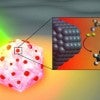
Rice's Naomi Halas has collaborated with Yale University engineers on the creation of a light-activated nanoparticle for clearing water of pollutants. The research is part of an effort by NEWT, the Rice-based Nanosystems Engineering Research Center for Nanotechnology-Enabled Water Treatment.
Rice University engineers have created a light-powered catalyst that can break the strong chemical bonds in fluorocarbons, a group of synthetic materials that includes persistent environmental pollutants.
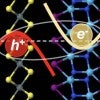
Mixing and matching computational models of 2D materials led scientists at Rice University to the realization that excitons can be manipulated in new and useful ways.
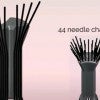
Rice researchers demonstrate methods to design data-centric hardware and co-designing hardware with machine-learning algorithms that can improve energy efficiency in artificial intelligence hardware.
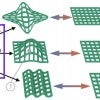
Soft robots and biomedical implants that reconfigure themselves upon demand are closer to reality with a method developed at Rice to print shapeshifting materials.
Rice University neuroengineers have created a tiny surgical implant that can electrically stimulate the brain and nervous system without using a battery or wired power supply.
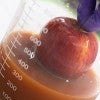
Eggs that would otherwise be wasted can be used as the base of an inexpensive coating to protect fruits and vegetables, according to Rice University researchers.
Rice engineering students won a grand prize at the Design of Medical Devices Conference for their invention to simplify treatment of late-stage cervical cancer
NASA flight surgeon Rob Mulcahy '08 was in charge of the prelaunch quarantine -- a precaution doubly important during the COVID-19 pandemic -- for the space agency's first manned mission to launch from the U.S. in almost a decade.
Rice University researchers capture the first video of boron nitride nanotubes in motion to prove their potential for materials and medical applications.
The Rice University COVID-19 Research Fund Oversight and Review Committee funds nine more faculty teams working to mitigate the effects of the new coronavirus.
Work by a Rice neurobiologist shows that increased blood flow to the brain is not an accurate indicator of neuronal recovery after a microscopic stroke.