Rice engineers have found a way to train deep neural networks for a fraction of the energy required today. Their Early Bird method finds key network connectivity patterns early in training.
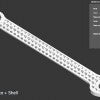
Rice University student teams present their 3D tool database designs to NASA and help spread the word to high schoolers about the value of a STEM education.
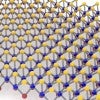
A 2D platform of molybdenum, sulfur and selenium is adept at detecting biomolecules via surface-enhanced Raman spectroscopy. Its nonmetallic nature helps by curtailing background noise.
Rice mechanical engineer Daniel Preston wins a National Science Foundation grant to study the effect of varying temperatures on the lifetime of the virus responsible for the COVID-19 pandemic.
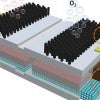
Rice University researchers have integrated high-efficiency solar cells and electrode catalysts into an efficient, low-cost device that splits water to produce hydrogen fuel.
Delivering water to city dwellers can become far more efficient, according to Rice University researchers who say it should involve a healthy level of recycled wastewater.
A study to classify unlabeled electrocardiograms in adults won the top prize in this year’s Rice University Center for Transforming Data to Knowledge spring showcase.
A Rice University lab has won a prestigious National Institutes of Health grant to pursue gene-editing research it hopes will lead to a cure for sickle cell disease (SCD).
When you open a laptop, a router can quickly locate it and connect it to the local Wi-Fi network. That ability, known as link discovery, is a basic element of any wireless network, and now a team of engineering researchers from Rice University and Brown University has developed a way to do that with terahertz radiation, the high-frequency waves that could one day make for ultrafast wireless data transmission.