
DARPA backs Rice sensor to detect COVID-19 virus in air
Researchers receive funding for up to $1 million to develop a real-time electronic sensor able to detect minute amounts of the airborne virus that causes COVID-19 infection.
DARPA backs Rice sensor to detect COVID-19 virus in air
Researchers receive funding for up to $1 million to develop a real-time electronic sensor able to detect minute amounts of the airborne virus that causes COVID-19 infection.
Study could explain tuberculosis bacteria paradox
Tuberculosis bacteria have evolved to remember stressful encounters and react quickly to future stress, according to a study by computational bioengineers at Rice University and infectious disease experts at Rutgers New Jersey Medical School.

Laura Segatori named AIMBE fellow
Rice bioengineer Laura Segatori has been named a fellow of the American Institute for Medical and Biological Engineering.
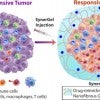
UTHealth, Rice advance oral cancer immunotherapy
Researchers at Rice and the University of Texas Health Science Center at Houston develop a hydrogel that could destroy oral cancer tumors.

Haotian Wang named Sloan Research Fellow
Rice University chemical and biomolecular engineer Haotian Wang has been selected as a 2021 Alfred P. Sloan Research Fellow.

Junghae Suh named AIMBE fellow
Rice bioengineer Junghae Suh has been named a fellow of the American Institute for Medical and Biological Engineering.
Kennedy Institute adds data scientist for COVID-19 research
Rice's Ken Kennedy Institute is collaborating with the University of Texas MD Anderson Cancer Center on data science research into long-term outcomes and improved treatment methods for COVID-19.

Collagen structures get the royal reveal
An algorithm by Rice University scientists predicts the structures and melting temperatures of collagen, the triple helix that accounts for about a third of the body’s proteins and forms the fibrous glue in skin, bones, muscles, tendons and ligaments.

Luminescent windows generate energy from inside and out
Rice engineers design and build windowpanes that redirect sunlight or illumination from indoors to edge-band solar cells.

Restaurant recommendation system wins Rice Datathon
A restaurant recommendation system to support small Houston businesses during the pandemic wins this year’s Rice Datathon.
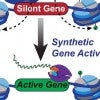
New CRISPR tech targets human genome’s complex code
Rice bioengineers harness the CRISPR/Cas9 system to program histones, the support proteins that wrap up and control human DNA, to manipulate gene activation and phosphorylation. The new technology enables innovative ways to find and manipulate genes and pathways responsible for diseases.
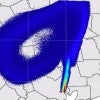
Failed storage tanks pose atmospheric risks during disasters
Rice engineers model hypothetical threats from toxins released when aboveground storage tanks fail during a storm.

Tune in to Datathon next weekend
The public is invited to look in upon Rice University’s third annual Datathon, sponsored by the Rice Data Science Club and the Data to Knowledge Lab.

Research could dramatically lower cost of electron sources
Rice University engineers have discovered technology that could slash the cost of semiconductor electron sources, key components in devices ranging from night-vision goggles and low-light cameras to electron microscopes and particle accelerators.

Brain-to-brain communication demo receives DARPA funding
Wireless linkage of brains may soon go to human testing with $8 million for preclinical demonstrations.