
Corps of Engineers funds bid to ‘flash’ waste into useful materials
A $5.2 million U.S. Army Corps of Engineers grant will expand Rice efforts to recycle waste into valuable products through flash Joule heating.
Corps of Engineers funds bid to ‘flash’ waste into useful materials
A $5.2 million U.S. Army Corps of Engineers grant will expand Rice efforts to recycle waste into valuable products through flash Joule heating.
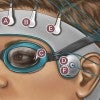
US Army backs ‘sleeping cap’ to help brains take out the trash
Rice engineers are developing a noninvasive device to understand how the brain disposes of metabolic waste during sleep.

NSF-backed ‘team of teams’ raises stakes for master’s students
Four institutions will share an NSF grant of nearly $5 million to support scholarships for students seeking master’s degrees in engineering and related fields.

A loose-fitting mask may be doing you no favors if you’re around SARS-CoV-2.

Rice lands grant to improve time-release drugs
HOUSTON – (Sept. 21, 2021) – Time-released drugs are about to get a geometry lesson, thanks to bioengineers at Rice University.
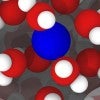
Modern simulations could improve MRIs
Rice University engineers improve simulations that analyze gadolinium-based contrast agents used in clinical magnetic resonance imaging. More efficient simulations could help make better compounds for imaging technologies.

NIH funds effort to customize treatment of movement impairments
Existing treatments for movement impairments are “off the rack” rather than “custom-tailored,” but B.J. Fregly, a Rice University professor of mechanical engineering and bioengineering, wants to change that situation.

Rice cuts ribbon on Maxfield Hall
Renovation of the historic Mechanical Engineering building, now called Maxfield Hall is complete.
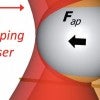
Tweezer grant pleases Rice researchers
Rice researchers have won an NSF grant to acquire a sophisticated optical tweezer microscope to manipulate, measure and monitor micron-scale particles.

Rice physicists find 'magnon' origins in 2D magnet
Rice physicists have confirmed the topological origins of magnons, magnetic features they discovered three years ago in a 2D material that could prove useful for spintronics.
Double-walled nanotubes have electro-optical advantages
Rice theorists find that flexoelectric effects in double-walled carbon nanotubes could be highly useful for photovoltaic applications.
Scientists make bilayer borophene for the first time. The versatile 2D material shows promise for quantum electronics, energy storage and sensors.

‘Smart’ shirt keeps tabs on the heart
Carbon nanotube thread woven into athletic shirts gathered electrocardiogram and heart rate data that matched standard monitors and beat chest-strap monitors. The fibers are flexible and the shirts are machine washable.

Trailblazing Rice bioengineer is turning cells into disease fighters
Rice University bioengineer Isaac Hilton has been awarded an NIH Trailblazer Award to create synthetic circular DNA that can be used to reprogram cells as disease fighters.

CPRIT grant establishes Genetic Design and Engineering Center
Rice faculty members led by bioengineer Gang Bao have been awarded a $4 million CPRIT grant to establish the Genetic Design and Engineering Center.