

National 2D materials research center wins NSF funding
Rice, Penn State and Boise State have won a federal grant to expand ATOMIC, a national research center that develops atom-thin 2D coatings via university, industry and government partnerships.
National 2D materials research center wins NSF funding
Rice, Penn State and Boise State have won a federal grant to expand ATOMIC, a national research center that develops atom-thin 2D coatings via university, industry and government partnerships.
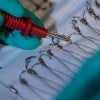
Woven nanotube fibers turn heat into power
Carbon nanotubes woven into thread-like fibers and sewn into fabrics become a thermoelectric generator that can turn heat from the sun or other sources into energy.

The Way I See It: The state of quantum computing
Ken Kennedy Institute Executive Director Angela Wilkins discusses the development and future of quantum computing.
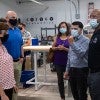
DesRoches, Nakhleh, others tour startup Syzygy Plasmonics
Rice's provost, dean of engineering and others toured chemical manufacturing startup Syzygy Plasmonics last week.

‘Smart cells’ show promise to treat disease
Laura Segatori wins NIH backing to develop synthetic biological circuits for cells that may someday sense trouble and respond by making just enough of the appropriate drugs.

Rice provost, structural engineer available to comment on Haiti earthquake
HOUSTON – (Aug. 15, 2021) – Rice University Provost Reginald DesRoches, a professor of civil and environmental engineering with expertise in structural engineering, is available to discuss this weekend’s magnitude 7.2 earthquake in Haiti.
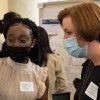
10 winners at IBB Summer Undergraduate Research Symposium
Posters by 10 summer interns were the best at this year’s IBB Summer Undergraduate Research Symposium.

Rice expert: Using carbon is key to decarbonizing economy
Rice University carbon materials expert Matteo Pasquali is available to discuss ways to slash carbon dioxide emissions and rapidly decarbonize the global economy.
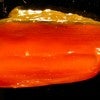
Data scientists go to the mat to learn about microbial networks
A project led by Rice University data scientists will attempt to define "social networks" in microbiomes, starting with microbial mats that thrive in Yellowstone Park's hot springs.
When many act as one, data-driven models can reveal key behaviors
Data science approaches can reveal subtle clues about the origins of such collective behaviors as aggregation of bacteria.
How headless hydra feel, react to prodding
Researchers identify redundant neural networks in jellyfish-like, freshwater hydra. The work is a step toward modeling how internal states and external stimuli shape the behavior of an organism with a highly dynamic neural architecture.

Vardi wins award for social and professional responsibility
Rice computer scientist Moshe Vardi has won the 2021 Norbert Wiener Award for Social and Professional Responsibility from IEEE's Society on the Social Implications of Technology.
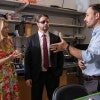
Rep. Dan Crenshaw hosts health care summit, tours neuroengineering labs
U.S. Rep. Dan Crenshaw (left), R-Texas, hosted his third annual Healthcare Innovation Summit July 23 at Rice University's BioScience Research Collaborative (BRC) in conjunction with the university's Institute of Biosciences and Bioengineering.
Rice team creating insulin-producing implant for Type 1 diabetes
Rice University bioengineers are using 3D printing and smart biomaterials to create an insulin-producing implant for Type 1 diabetics.
AI could expand healing with bioscaffolds
Artificial intelligence can speed the development of 3D-printed bioscaffolds that help injuries heal, according to Rice researchers.