Body
Body
Shield
Rice University News and Media Relations Office of Public Affairs

Main Nav

Elevate Research

A study of stress on bacteriophage T7 will help Rice structural biologist Yang Gao and his team to reveal the atomic-scale mechanisms of DNA replication. Illustration courtesy of the Yang Gao Lab

Rice lab dives deep for DNA’s secrets

August 27, 2021

Structural biologist Yang Gao receives a five-year National Institutes of Health grant to detail how complex protein chains replicate DNA and fix errors on the fly. What they find could help treat genomic disease, including cancer.

Rice University has been awarded a $4 million grant by the Cancer Prevention and Research Institute of Texas to establish the Genetic Design and Engineering Center. (Credit: Illustration by Olivia Flynn/Bashor Lab)

CPRIT grant establishes Genetic Design and Engineering Center

August 20, 2021

Rice faculty members led by bioengineer Gang Bao have been awarded a $4 million CPRIT grant to establish the Genetic Design and Engineering Center.

Carbon nanotubes woven into thread-like fibers and sewn into fabrics become a thermoelectric generator that can turn heat from the sun or other sources into energy in a project developed at Rice University. (Credit: Jeff Fitlow/Rice University)

Woven nanotube fibers turn heat into power

August 16, 2021

Carbon nanotubes woven into thread-like fibers and sewn into fabrics become a thermoelectric generator that can turn heat from the sun or other sources into energy.

Sample trajectories of the paths traveled by fluorescently tagged Myxococcus xanthus cells that were aggregating in mounds. The trajectories are superimposed on a fluorescent image in which the aggregates appear white. (Image courtesy of C. Cotter/UGA)

When many act as one, data-driven models can reveal key behaviors

August 4, 2021

Data science approaches can reveal subtle clues about the origins of such collective behaviors as aggregation of bacteria.
Rice University researchers introduced noncanonical amino acid building blocks into proteins in living cells, pioneering a powerful tool for investigating and manipulating the structure and function of proteins. The resulting unnatural organism, a strain of Escherichia coli bacteria, is able to monitor low levels of oxidative stress. (Credit: Xiao Lab/Rice University)

Programmed bacteria have something extra

July 30, 2021

Rice chemists expand genetic code of E. coli to produce 21st amino acid, giving it new abilities.
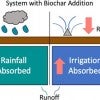
Biochar’s benefits for the long-term sequestration of carbon and nitrogen on American farms are clear, but new research from Rice University shows it can help farmers save money on irrigation as well. The study showed that sandy soil, in particular, gains ability to retain more water when amended with biochar. (Credit: Masiello Lab/Rice University)

Biochar helps hold water, saves money

July 21, 2021

Biochar’s benefits for long-term storage of carbon and nitrogen on American farms are clear, but new research from Rice University shows it can help farmers save money on irrigation as well.
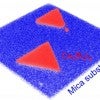
At left, top and side views of the crystal structures of perovskite-derived Cs3Bi2I9, a material synthesized at Rice University that shows valleytronics capabilities. Each unit cell contains two neighboring layers with a weak van der Waals interaction in between. At right: an image shows triangles of the material on a mica substrate. (Credit: Lou Group/Rice University)

Odds are good for unique 2D compound

July 20, 2021

Rice University engineers make 2D materials for valleytronics, a platform for information processing and storage that relies on the manipulation of electrons’ positions in energetic “valleys.”

A novel antibody-drug conjugate targets cancer cells, but also kills "bystander" cancer cells. Credit: Illustration by the Jenna Kripal/Nicolaou Research Group

Targeted tumors attack not-innocent bystanders

July 16, 2021

Antibody-drug conjugates developed are found to attack not only targeted tumor cells but also nontargeted “bystanders.”

Scientists at Rice University and Baylor College of Medicine are using pClick conjugation to create therapeutic antibodies that target bone cancers. The conjugate incorporates bisphosphonate molecules that bind to the bone hydroxyapatite matrix. (Credit: Baylor College of Medicine/Rice University)

Drug doubles down on bone cancer, metastasis

July 16, 2021

Researchers at Rice University and Baylor College of Medicine develop an antibody conjugate called BonTarg that delivers drugs to bone tumors and inhibits metastasis.

Rice University postdoctoral researcher Zhiwen Liu shows a marine fungus, Penicillium citrinum, the source of a catalytic enzyme that could simplify the development and manufacture of drugs. (Credit: Jeff Fitlow/Rice University)

Enzyme from fungi shows molecules which way to turn

July 15, 2021

A small fungal enzyme could play a significant role in simplifying the development and manufacture of drugs, according to Rice University scientists.

Video by Esteban Dodero-Rojas and Paul Whitford/Center for Theoretical Biological Physics

Rice, Rutgers developing inhalable COVID-19 vaccine spray

July 7, 2021

Scientists at Rice and Rutgers developing two COVID-19 vaccine strategies that do not require cold storage, one of which can be inhaled.

Coating ceramic schwarzites, 3D-printed lattices, with a thin polymer helps keep them from shattering under pressure, according to Rice University materials scientists.

Soft shell makes hard ceramic less likely to shatter

July 7, 2021

Coating ceramic schwarzites, 3D-printed lattices, with a thin polymer helps keep them from shattering under pressure.

Julian West

NIH grant will help streamline chemical synthesis

July 5, 2021

Rice University chemist Julian West has won a five-year, $1.8 million National Institutes of Health grant to advance his lab’s efforts to simplify the synthesis of organic chemicals.

Rice University synthetic chemists have simplified the process to make halichondrin B, top, the parent compound of the successful cancer drug eribulin, bottom. Their reverse synthesis reduced the number of steps required to make the natural product. (Credit: Jenna Kripal/Nicolaou Research Group)

Reversal speeds creation of important molecule

June 29, 2021

A Rice lab’s reverse approach to making halichondrin B is the shortest route to a “rather complex and important molecule."

Aerial image of the Texas Medical Center with the ENRICH office logo

Six Rice-TMC research teams earn seed grants

June 28, 2021

Rice's Educational and Research Initiatives for Collaborative Health has announced six seed grants for research collaborations between faculty from Rice and the Texas Medical Center.

Pagination

  • First page « First
  • Previous page ‹ Previous
  • …
  • Page 5
  • Page 6
  • Current page 7
  • Page 8
  • Page 9
  • …
  • Next page Next ›
  • Last page Last »
Body
Current Featured Releases Alerts Dateline Contact BACK TO TOP

6100 Main St., Houston, TX 77005-1827 |

Mailing Address: P.O. Box 1892, Houston, TX 77251-1892 |

713-348-0000 | Privacy Policy | Campus Carry

Body