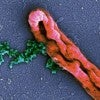
Microplastics dispersed in the environment may enhance antibiotic resistance. A study led by Rice University found the chemical-leaching plastics draw bacteria and other vectors and make them susceptible to antibiotic resistant genes.
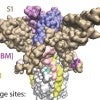
Software under development at Rice University and its partners reveals mutations in the omicron variant of SARS-CoV-2 that may help it evade antibodies, including those from vaccinations.
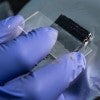
Rice University engineers are printing 3D lattices of glass and crystal with sub-200 nanometer resolution. The technique could make it practical to print micro-scale electronic, mechanical and photonic devices.
Scientists have discovered that symbiotic single-celled algae that live inside of and feed corals can reproduce not only by mitosis, but also sexually. Encouraging sex in these algae can accelerate their evolution to produce strains better able to help reefs cope with climate change.
Rice University engineers improve simulations that analyze gadolinium-based contrast agents used in clinical magnetic resonance imaging. More efficient simulations could help make better compounds for imaging technologies.
Rice scientists study the dynamics of the immune system’s antimicrobial peptides, which attack and eliminate harmful bacteria. They find peptides that invade bacteria and do their damage from the inside are underrated.