
Brain-to-brain communication demo receives DARPA funding
Wireless linkage of brains may soon go to human testing with $8 million for preclinical demonstrations.
Brain-to-brain communication demo receives DARPA funding
Wireless linkage of brains may soon go to human testing with $8 million for preclinical demonstrations.
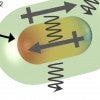
‘Soft’ nanoparticles give plasmons new potential
Bigger is not always better, but here’s something that starts small and gets better as it gets bigger.
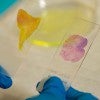
AI-powered microscope could check cancer margins in minutes
Researchers from Rice University and MD Anderson Cancer Center have created a microscope that uses artificial intelligence to quickly and inexpensively image large tissue sections at high resolution with minimal preparation. If clinically validated, the DeepDOF microscope could allow surgeons to inspect tumor margins within minutes.
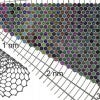
Sheets of carbon nanotubes come in a rainbow of colors
Nanomaterials researchers in Finland, the United States and China have created a color atlas for 466 unique varieties of single-walled carbon nanotubes.
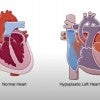
Top Rice data science team shows heart in plan to save babies
Winning Data to Knowledge Lab project uses data science techniques to help save babies with congenital heart defects.

Sabharwal elected fellow of National Academy of Inventors
Ashutosh Sabharwal, the Ernest Dell Butcher Professor and chair of electrical and computer engineering and a pioneer in two areas of wireless and health technologies has been elected a fellow of the National Academy of Inventors.

People, papers and presentations Dec 7,2020
Richard Baraniuk, the Victor E. Cameron Professor of Electrical and Computer Engineering and a professor of computer science, is co-author of the introduction to “The Science of Deep Learning,” a special issue of the Proceedings of the National Academy of Sciences.
Rice physicist shares grant to advance imaging
The lab of physicist Junichiro Kono will share in a $1 million grant from the Chan Zuckerberg Initiative to improve imaging of proteins, cells and tissues.
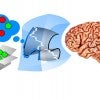
AI helps scientists understand brain activity behind thoughts
Researchers from Baylor College of Medicine and Rice University have developed artificial intelligence models that help them better understand the brain computations that underlie thoughts.
People, papers and presentations November 23, 2020
Kevin Kelly, a professor of electrical and computer engineering, has an open-access featured perspective in the Journal of Chemical Physics.
Rice researchers top two categories in ‘Create the Future’ contest
Rice University was a double winner in the annual Create the Future Design Contest, an international competition in its 19th year.
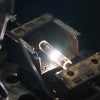
VIPs help open national security research accelerator labs
U.S. Army Futures Command Lt. Gen. Thomas Todd III and U.S. Rep. Dan Crenshaw, R-Texas, joined Rice President David Leebron, Provost Reggie DesRoches and Army and Rice dignitaries for the Oct. 30 opening ceremony of the Rice University National Security Research Accelerator (RUNSRA) laboratories in Dell Butcher Hall.
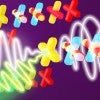
A trillion turns of light nets terahertz polarized bytes
Nanophotonics researchers at Rice University, the Polytechnic University of Milan and the Italian Institute of Technology have demonstrated a novel technique for modulating light at terahertz frequencies with plasmonic metasurfaces.
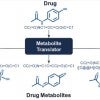
Deep learning gives drug design a boost
A computational tool created at Rice University may help pharmaceutical companies expand their ability to investigate the safety of drugs.