

Odd angles make for strong spin-spin coupling
HOUSTON – (May 25, 2021) – Sometimes things are a little out of whack, and it turns out to be exactly what you need.
Odd angles make for strong spin-spin coupling
HOUSTON – (May 25, 2021) – Sometimes things are a little out of whack, and it turns out to be exactly what you need.

NIH grant boosts computational search for cancer drugs
Computer scientist Lydia Kavraki of Rice University’s Brown School of Engineering has won a prestigious National Institutes of Health U01 grant to develop a new approach to model and analyze protein-ligand interactions in cancer research.
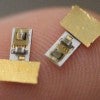
Timing is everything in new implant tech
Rice engineers' wireless implants now allow for multiple stimulators to be programmed and magnetically powered from a single transmitter.

Students’ model could help avoid costly natural gas compressor shutdowns
A student project to predict the need for maintenance in natural gas compressors and avoid unexpected shutdowns has won this year’s Data to Knowledge Lab Showcase.

Help may be at hand for hair-pulling
People who compulsively pull their hair – suffering from an affliction known as trichotillomania – could find relief with a device created by Rice University students.

Wearable glucose monitors shed light on progression of Type 2 diabetes in Hispanic/Latino adults
In one of the first studies of its kind, medical and engineering researchers have shown wearable devices that continuously monitor blood sugar provide new insights into the progression of Type 2 diabetes among at-risk Hispanic/Latino adults.

Rice names architect for new engineering and science building
With the imminent demolition of Rice University’s Abercrombie Engineering Laboratory, the space will soon be cleared for a new engineering and science building, according to Rice administrators. International architecture firm Skidmore, Owings & Merrill (SOM) has been selected as lead architect for the new building. Houston’s Scientia Architects will consult on laboratory design.
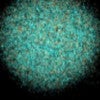
Silver ions hurry up, then wait as they disperse
There’s gold in them thar nanoparticles, and there used to be a lot of silver, too. But much of the silver has leached away, and researchers want to know how.
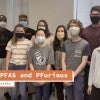
Rice engineers WERC hard for the money
Students calling themselves “PFAS and PFurious” took four prizes, including first place, in this year’s 31st WERC Environmental Design Contest.

Rice team vying for $1 million Solar Desalination Prize
A Rice team's clever design uses the power of the sun to make fresh water from saltwater, even at night.

Houston Methodist, Rice U. launch neuroprosthetic collaboration
Rice and Houston Methodist are partnering to solve clinical problems with neurorobotics at the new Center for Translational Neural Prosthetics and Interfaces, a collaboration that brings together scientists, clinicians, engineers and surgeons.

Former engineering dean Sidney Burrus dies at 86
Charles Sidney Burrus — "Sid" to almost everyone — whose boyhood fascination with electricity set him on a path to become a pioneer in digital signal processing during a long and influential career at Rice University, died April 3.

Seven research teams win Carbon Hub funding
Carbon Hub, Rice University's zero-emissions research initiative, has awarded seed grants for seven projects that will rapidly advance its vision for transforming the oil and gas sector into a leading provider of both clean hydrogen energy and solid carbon products that can be used in place of materials with large carbon footprints.

Rice's Yingyan Lin receives NSF CAREER Award
Rice engineer Yingyan Lin has won a National Science CAREER Award to help close the gap between fast “deep learning” algorithm advances and slow accelerator development.