

New technology TA positions empower students to partner with professors
These student jobs are about more than just troubleshooting Zoom calls.
New technology TA positions empower students to partner with professors
These student jobs are about more than just troubleshooting Zoom calls.
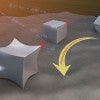
Shape matters for light-activated nanocatalysts
Points matter when designing nanoparticles that drive important chemical reactions using the power of light, according research from Rice University's Laboratory for Nanophotonics.
Three research teams earn Dunn Awards
Three teams of Rice University and Baylor College of Medicine researchers have been named winners of the 2020 John S. Dunn Collaborative Research Awards.

Ambient light alters refraction in 2D material
Microscopic crystals in tantalum disulfide have a starring role in what could become a hit for 3D displays, virtual reality and even self-driving vehicles.
Largest gift in Rice history establishes The Welch Institute
The Robert A. Welch Foundation announces the largest single gift in the history of Rice University, $100 million, to establish The Welch Institute for world-leading advanced materials research.

Researchers set sights on theory of deep learning
Rice's Richard Baraniuk and Moshe Vardi are part of a multiuniversity team of engineers, computer scientists, mathematicians and statisticians tapped by the Office of Naval Research to develop a principled theory of deep learning.
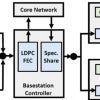
NSF backs first community platform for smarter wireless
Rice University researchers, with National Science Foundation backing, develop a community platform, 3DML, to accelerate machine learning for next-generation wireless networks and mobile applications.
Rice’s RAMBO-II: A sequel better than the original
First-of-its-kind spectrometer is getting stronger magnets, wider range of lasers.

Small quake clusters can’t hide from AI
A deep learning algorithm developed at Rice University analyzes data from a deadly landslide in Greenland to show how it may someday predict seismic events like earthquakes and volcanic eruptions.
No limit yet for carbon nanotube fibers
Rice University researchers report advances in their quest to make the best carbon nanotube fibers for industry.
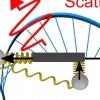
Cartwheeling light reveals new optical phenomenon
Researchers at Rice University have discovered details about a novel type of polarized light-matter interaction with light that literally turns end over end as it propagates from a source.
Rice lab’s bright idea is pure gold
Physicists discover plasmonic metals can produce “hot carriers” that emit unexpectedly bright light in nanoscale gaps between electrodes.

People, papers and presentations Jun 29, 2020
Topics to be discussed are agriculture, energy, women’s health and plastics.

Purifying water with a partly coated gold nanoparticle
Rice's Naomi Halas has collaborated with Yale University engineers on the creation of a light-activated nanoparticle for clearing water of pollutants. The research is part of an effort by NEWT, the Rice-based Nanosystems Engineering Research Center for Nanotechnology-Enabled Water Treatment.