The Robert A. Welch Foundation announces the largest single gift in the history of Rice University, $100 million, to establish The Welch Institute for world-leading advanced materials research.
Researchers at Rice University have discovered details about a novel type of polarized light-matter interaction with light that literally turns end over end as it propagates from a source.
Rice's Naomi Halas has collaborated with Yale University engineers on the creation of a light-activated nanoparticle for clearing water of pollutants. The research is part of an effort by NEWT, the Rice-based Nanosystems Engineering Research Center for Nanotechnology-Enabled Water Treatment.
Rice University engineers have created a light-powered catalyst that can break the strong chemical bonds in fluorocarbons, a group of synthetic materials that includes persistent environmental pollutants.
Rice University researchers model the role of relaxation time as T cells bind to invaders or imposters, and how their ability to differentiate between the two triggers the body’s immune system.
Mixing and matching computational models of 2D materials led scientists at Rice University to the realization that excitons can be manipulated in new and useful ways.
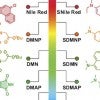
Fluorophores with one oxygen atom replaced by a sulfur atom can be triggered with light to create reactive oxygen species within cancer cells, killing them.
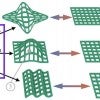
Soft robots and biomedical implants that reconfigure themselves upon demand are closer to reality with a method developed at Rice to print shapeshifting materials.