Rice’s Julian West has been developing a less expensive, faster and more environmentally friendly way to catalyze carbon bonding to carbon-carbon double bonds with a breakthrough recently published in the journal Nature Catalysis.
James Tour’s lab developed a method to capture the fluoride from these waste streams and recycle it into a useful reagent, silver fluoride, that could be used in other manufacturing processes.
Rice is once again among the nation’s leading universities, earning the No. 10 spot in Niche’s 2027 Best Colleges in America rankings while placing in the top 10 across 18 academic disciplines and university categories.
David Sholl, Rice’s executive vice president for research and professor of chemical and biomolecular engineering, recently published an opinion piece in ACS Central Science, where he and co-author Andrew Medford, associate professor of chemical and biomolecular engineering at Georgia Institute of Technology, share their perspective on machine learning tools expected to bring radical changes to the field of computational chemistry.
Rice professor Pernilla Wittung Stafshede recently served as a co-organizer of the 75th Lindau Nobel Laureate Meeting, where she co-represented the field of chemistry.
Hans Renata’s team recently developed a method that significantly reduces the cost of adding thiophosphate to chemical structures, opening up new pathways for drug design.
New funding from CPRIT will help Rice advance cancer research on several fronts, from strengthening a core genetic engineering facility that serves researchers across Texas to supporting new studies in cancer immunotherapy, next-generation radiation therapy and ovarian cancer.
Researchers at Rice have now solved a long-standing mystery in a widely used organic semiconductor, revealing how tiny structural imperfections can actually improve how these materials work.
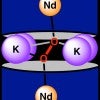
Rice researchers develop a way to create new interaction between dioxygen and a lanthanide metal called neodymium, enabling the creation of lanthanide-oxos.
Five Rice professors, Pernilla Wittung-Stafshede, Volker Rudolf, Edward Knightly, Marcia O’Malley and Ed Billups, have been elected as fellows of the American Association for the Advancement of Science.