Hidden symmetry found in chemical kinetic equations
Rice University researchers have discovered a hidden symmetry in the chemical kinetic equations scientists have long used to model and study many of the chemical processes essential for life.
Hidden symmetry found in chemical kinetic equations
Rice University researchers have discovered a hidden symmetry in the chemical kinetic equations scientists have long used to model and study many of the chemical processes essential for life.

Almost gone but never forgotten
Julianne Yost wins this year’s top teaching award, the George R. Brown Prize for Excellence in Teaching.
Rice to offer new master's degree in applied chemical sciences
Rice is offering a new master's degree in applied chemical sciences that combines advanced coursework in science and management with business training and hands-on experience.

Rice wins federal grant to advance sickle cell disease therapy
A Rice University lab has won a prestigious National Institutes of Health grant to pursue gene-editing research it hopes will lead to a cure for sickle cell disease (SCD).

As the COVID-19 crisis plays out, Rice University faculty have been proactively making the best of a difficult situation for their students.
Heart nanofibers in STAT Madness semifinals
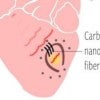
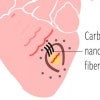
Texas Heart Institute and Rice University’s heart-saving nanotube fibers have advanced to the semifinal round of STAT Madness.

Rice professors named AIMBE fellows
Two Rice University faculty members have been named to the College of Fellows of the American Institute for Medical and Biological Engineering.

Coronavirus and the classroom: How Rice is tackling the move to remote learning
Rice students, faculty and staff are finishing the spring semester in unprecedented circumstances, responding to the threat of COVID-19 by hunkering down and delivering classes online.
Heart nanofibers in STAT Madness quarterfinals
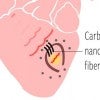
Texas Heart Institute and Rice University’s heart-saving nanotube fibers have advanced to the quarterfinal round of STAT Madness.
Heart nanofiber project makes STAT Madness round 3
A Texas Heart Institute/Rice project to use nanotube fibers to repair damaged hearts advances to round 3 of STAT Madness.
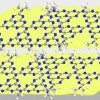
New nano strategy fights superbugs
Rice researchers imprint carbon nitride nanosheets to catch and kill free-floating antibiotic resistant genes found in secondary effluent produced by wastewater treatment plants. The strategy would prevent the DNA molecules from making downstream bacteria more resistant to drugs.
Heart nanofibers make STAT Madness Round 2
The Rice/Texas Heart Institute project to use nanotube fibers to repair damaged hearts makes Round 2 of STAT Madness.
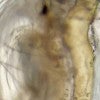
Tissue-digging nanodrills do just enough damage
Scientists at Rice and their collaborators show light-activated molecular drills effectively kill cells in whole eukaryotic organisms.