
Solving the oxygen problem in cell-based drug delivery
Rice researchers and collaborators have now successfully integrated solutions to several persistent challenges to implantable drug factories into a single device.
Solving the oxygen problem in cell-based drug delivery
Rice researchers and collaborators have now successfully integrated solutions to several persistent challenges to implantable drug factories into a single device.

Scalable platform sheds light on how cancer spreads
A new platform makes it easier to study metastasis and sheds light on how cancer clusters survive in the bloodstream when spreading from a primary tumor to other parts of the body.
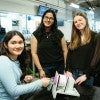
Rice students design realistic training model to improve uterine cancer biopsy access worldwide
For an interdisciplinary team of Rice undergraduates, improving global women’s health started with a pressing question: What does it take to make an essential cancer diagnostic procedure available worldwide?
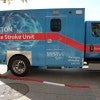
In collaboration with the Houston Health Department, the Rice360 Institute for Global Health Technologies recently hosted a two-part Mobile Stroke Unit Advocacy Hack-a-thon, inviting students to help solve one of the most pressing challenges facing this innovative technology.

Shruti Kashinath ’11: Bridging innovation and patient care in global health
As Rice expands its global footprint through Rice Global India, Shruti Kashinath sees meaningful opportunities to connect alumni expertise with India’s rapidly growing startup ecosystem.

New gel-based system allows bacteria to act as bioelectrical sensors
Rice researchers developed a safe bioelectronic sensor that allows for effective electronic communication even in liquid environments.
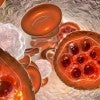
Rice's Omid Veiseh has been awarded a $2.2 million grant from the Gates Foundation to develop implantable cell factory platforms that can deliver therapeutic antibodies over extended periods.

CRISPR-based technique unlocks healing power of mitochondria for heart failure therapy
Rice researchers and collaborators induced heart cells to increase mitochondria production to optimal levels, opening a path toward a new therapy for heart failure.

A team of researchers led by Rice bioengineer Omid Veiseh has been awarded up to $18.2 million in funding from the Advanced Research Projects Agency for Health to develop a first-of-its-kind regenerative treatment aimed at restoring damaged lymphatic vessels and potentially curing lymphedema, a condition that affects more than 10 million Americans.

The NASA Reauthorization Act of 2026, sponsored by Texas Rep. Brian Babin (R-Woodville), moves tomorrow to consideration by the full U.S. House of Representatives following unanimous approval by the House Committee on Science, Space and Technology. As lawmakers consider the legislation, Rice experts are available to provide perspective on the bill’s implications for space science, engineering and aeronautics, artificial intelligence, public-private partnerships and the future aerospace workforce.

Rice’s SynthX Center leads up to $18M effort to transform lymphatic imaging
Rice's SynthX Center is leading a new effort to improve how doctors detect and diagnose lymphatic diseases.

Platform to map living brain noninvasively takes next big step
A technology designed to read gene activity in the brain from a simple blood test has now cleared a major translational hurdle.

More precise DNA base editing could improve treatment for cystic fibrosis
Researchers at Rice and collaborators have refined a DNA base-editing technology to make it more precise, a step that could improve prospects for treating some patients with cystic fibrosis.
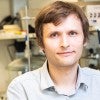
Noninvasive paths to complex brain science: Rice bioengineer named Sloan Research Fellow
Rice bioengineer Jerzy Szablowski has been named a 2026 Alfred P. Sloan Research Fellow in chemistry, one of the most competitive honors for early career scientists in the U.S. and Canada.
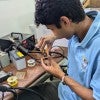
Rice360 and African universities inspiring new generation of inventors and global health innovators
When the Rice360 Institute for Global Health Technologies launched the first design studios in partner universities across Africa during Phase 1 of the NEST360 initiative, the vision was clear: create sustainable, university-based ecosystems that empower students to design, prototype and commercialize lifesaving technologies inspired by real needs in their own communities.