

Rice bioengineer Jerzy Szablowski has been named a 2026 Alfred P. Sloan Research Fellow in chemistry, one of the most competitive honors for early career scientists in the U.S. and Canada.
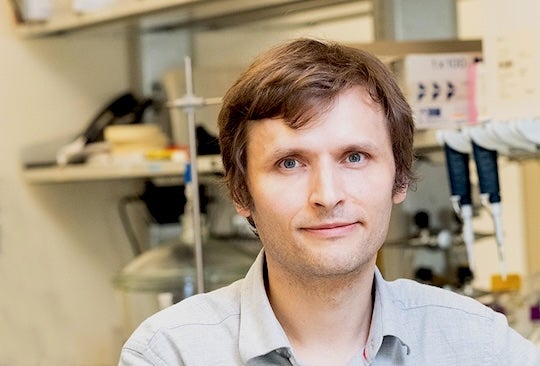
Szablowski is among 126 researchers selected this year for the fellowship, which recognizes “exceptional researchers whose creativity, innovation and research accomplishments make them stand out as the next generation of leaders,” according to the Alfred P. Sloan Foundation. His work explores creative ways to communicate with the brain ⎯ for both diagnostic and therapeutic purposes ⎯ in a noninvasive manner.
Though deeply rooted in chemistry, Szablowski’s research is interdisciplinary in nature and also deploys bioengineering and neuroscience approaches to obtain information about, or precisely deliver therapeutics to, the brain.
One of the methods he has been developing involves the use of synthetic serum markers ⎯ engineered molecules that measure cell function in hard-to-reach tissues like the brain, eye or spinal cord but that can then pass into the bloodstream for simple retrieval. The markers are extremely sensitive reporters detecting as few as 12 neurons. They have also provided new unexpected capabilities such as measuring sustained neuronal activity via a blood test, which is why Szablowski calls them a “surprisingly powerful tool.”
“We have used many engineering tools to boost the signal but did not expect we could detect just a dozen neurons in living tissue,” he said. “I get excited whenever there is a way to solve a big problem in a straightforward way.”
Szablowski said he is interested in versatile platform technologies “that can be easily adapted to obtain new types of research data or treat multiple diseases.” One long-term goal is to enable noninvasive “transcriptomic readouts,” where a single blood test could provide a snapshot of gene expression in specific regions of the brain.
The same outlook applies to Szablowski’s approach to drug development: His lab is working on tools that could dramatically shorten the time it takes to discover and evaluate new therapies, especially for poorly understood neurological disorders. Recent advancements confirm that Szablowski is on the right track: Focused ultrasound, one of the lab’s key delivery tools, has moved rapidly from the research bench into the clinical space. At the same time, gene therapy has opened the door to more complex and customizable treatments.
“Being recognized for this work makes me even more excited to continue moving forward,” said Szablowski, who is an assistant professor of bioengineering at Rice. “The Sloan Research Fellowship provides flexible funding that allows our lab to pursue high-reward hypotheses. This recognition helps us amplify our impact, bringing more attention to the development of new therapeutic platforms and noninvasive methods to communicate with the brain.”
Szablowski joined Rice’s faculty in 2020 and credits the university’s collaborative culture for accelerating his work. “Rice attracts excellent students who make our work happen in the lab,” he said. “Without their work we wouldn’t be able to engineer synthetic serum markers or new tools for gene therapy in the brain.”
He also noted the university’s close ties with the Texas Medical Center.
“I was surprised by how well integrated Rice was with the Texas Medical Center,” Szablowski said. “From the first few months, we had multiple productive and funded collaborations on topics ranging from epilepsy, through infectious disease, to Parkinson’s disease.”
Awarded annually since 1955, the Sloan Research Fellowships are widely regarded as a marker of future scientific leadership. Fellows are chosen by independent panels of senior scholars from a pool of more than 1,000 nominees nationwide.
“Jerzy is a pioneer in his field, developing technologies for nondisruptive monitoring and modification of brain function,” said Cynthia Reinhart-King, Rice’s John W. Cox Chair of Bioengineering, who nominated Szablowski for the award. “His work is truly redefining what is possible within the field of neuroengineering. Receiving the Sloan Fellowship is a testament to his leadership within the field and his paradigm-shifting approaches to study and treat the brain.”