
Rice University bioengineer Omid Veiseh has been awarded a $2.2 million grant from the Gates Foundation to develop implantable cell factory platforms that can deliver therapeutic antibodies over extended periods of two years or longer.
By reducing the need for repeated dosing for the treatment and prevention of infectious diseases such as HIV and malaria, the platform could expand access to biologic therapies, including in low- and middle-income countries.
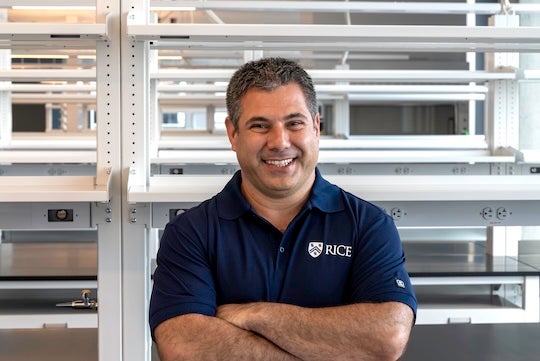
Veiseh, a professor of bioengineering at Rice and faculty director of the Rice Biotech Launch Pad ⎯ a Houston-based accelerator focused on expediting the translation of the university’s health and medical technology discoveries into cures ⎯ will lead the project, in collaboration with Michael Diehl, an associate professor of bioengineering at Northwestern University. Tulane University is also a collaborator on the project.
More than 212 monoclonal antibodies are currently approved for clinical use worldwide, reshaping outcomes across autoimmune disease, infectious disease and oncology. Despite their clinical success, most antibodies are delivered through frequent high-dose injections or intravenous infusions. This approach creates peak-trough drug levels that can impact tolerability and durability of response, while driving significant health care costs, infrastructure demands and patient burden. For chronic diseases and for health care systems in resource-limited settings, these limitations represent both a persistent access challenge and a substantial opportunity for innovation in long-acting delivery technologies.
The project, titled “Cell Factories for Durable Protein Expression,” builds on progress made under prior support from the foundation, which enabled the development of high-potency cell lines and an immunomodulatory hydrogel that together provided stable, yearlong in vivo delivery of HIV-neutralizing antibodies in preclinical models.
The current grant advances two complementary strategies designed to overcome oxygenation and scalability limitations observed in earlier implantable formats:
- Hydrogel capsules containing antibody-producing cell factories that can be administered via a simple subcutaneous injection for seasonal malaria prophylaxis and treatment.
- Wireless miniaturized biocompatible devices that enable the continuous production of HIV-neutralizing antibodies for at least 4 years.
“This award enables us to advance a next-generation living protein factory technology that we hope will fundamentally change how infectious diseases like malaria and HIV are prevented and treated,” said Veiseh, who is also a Cancer Prevention and Research Institute of Texas Scholar. “Through the translational infrastructure and company-building support of the Rice Biotech Launch Pad, we are able to accelerate the development of implantable systems capable of sustained therapeutic protein expression for months to a year or more. Our goal is to reduce dosing frequency, sustain efficacious drug levels and address the affordability and access challenges that currently limit the global impact of biologic medicines.”
In alignment with the Gates Foundation’s Global Access commitment, the project will prioritize scalable manufacturing strategies and cost-of-goods analyses to ensure resulting technologies can be made broadly available at affordable cost to populations most in need.
If successful, the platform could provide a transformative approach for long-acting biologic delivery across infectious disease, oncology and autoimmune indications, significantly expanding global access to advanced antibody therapeutics.
- About RBL LLC:
-
RBL LLC is a pioneering biotech venture creation studio based in Houston that is dedicated to accelerating the development of breakthrough medical technologies and therapies through company formation. RBL provides entrepreneurs, researchers and innovators with the infrastructure, financial support and strategic guidance as well as access to laboratory space and shared resources in the Texas Medical Center Helix Park. For more information, please visit https://www.rbl-llc.com/.
- About the Rice Biotech Launch Pad:
-
The Rice Biotech Launch Pad is a Houston-based accelerator focused on expediting the translation of Rice University’s health and medical technology discoveries into cures. This initiative is designed to help advance internally discovered platform technologies from concept to clinical studies and commercialization. The Rice Biotech Launch Pad will identify and support highly differentiated projects while driving the expansion of Houston as a world-class medical innovation ecosystem. The accelerator will bring together local researchers with a network of industry executives. For more information, please visit https://biotechlaunchpad.rice.edu/.