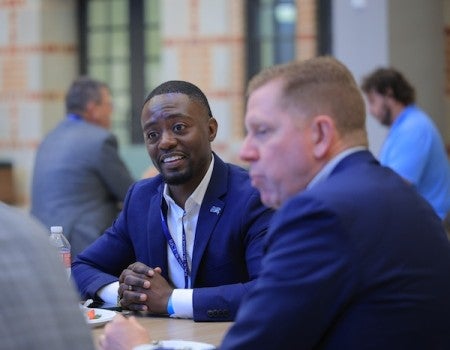
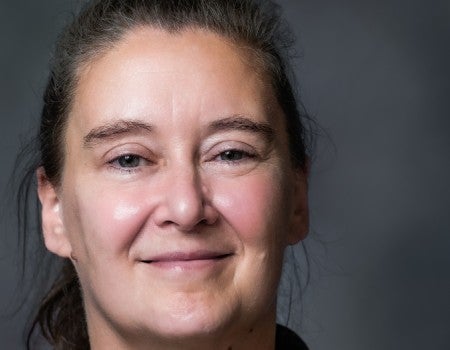
With the 2026 midterm elections approaching, former U.S. House Speaker Paul Ryan joined Rice's Baker Institute for Public Policy for a conversation ab...
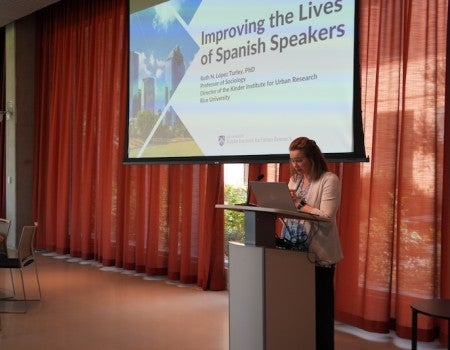
Rice’s Texas-Latin America Social Science Forum on Language and Opportunity brought together scholars from sociology, economics and political science ...
With a May 11, 2027 national deadline for digital accessibility compliance approaching, Rice is accelerating efforts to make its digital environment m...
Rice University’s Ken Kennedy Institute will celebrate its 40th anniversary Nov. 9 with a public event on responsible AI leadership. The daylong progr...
The annual Texas ETA Conference, organized by Rice MBA students and hosted by Rice Business, brought together aspiring entrepreneurs, investors, busin...
Rice launched AI Week 2026 with a fireside chat focused on how artificial intelligence will shape the university’s future in research, teaching and op...
Rice researchers have developed an ultraporous material capable of pulling several valuable and rare earth elements from complex waste streams, a pote...
Researchers from Rice and Baylor College of Medicine have secured NIH funding to develop a novel, non-DNA-altering CRISPR gene-tuning therapy designed...
Lisa Basgall, Rice's Emergency Medical Services director, has earned the Chief EMS Officer designation, a professional credential held by fewer than 3...
When geopolitical conflicts disrupt fuel shipments, electricity demand outpaces infrastructure development or critical mineral shortages threaten indu...
The Global Consortium of Entrepreneurship Centers (GCEC), headquartered at the Rice Alliance for Technology and Entrepreneurship, brought leading univ...
The Brain House at the World Economic Forum’s (WEF) upcoming annual meeting in Davos, Switzerland, is a marquee platform designed to spotlight the critical importance of brain health and how innovation in “brain capital” can address some of the world’s most pressing challenges. Sponsored by Rice University for the second consecutive year, The Brain House hosted by the Davos Alzheimer’s Collaborative Jan. 20-24 will showcase a series of events featuring leading experts in health and innovation who are advancing global brain health.
Rice is a hub of cutting-edge, multidisciplinary research on the brain. In addition to a critical mass of researchers in the field, Rice is home to entities dedicated to collaborative clinical and scientific research on the brain.
The Rice Board of Trustees recently recognized Caitlin Lindsay for her unwavering service to the institution and its constituents. She currently serves as the student center director of operations. In addition, she is a Critical Dialogues on Diversity lecturer, a resident associate at Jones College, a member of Staff Council, board treasurer for Valhalla and Willy’s Pub and the situation unit leader of the incident management team. Lindsay sits on various campus committees including the expense reporting improvements design committee and events steering committee.
An international team of engineers has developed an innovative, scalable method for creating topography-patterned aluminum surfaces, enhancing liquid transport properties critical for applications in electronics cooling, self-cleaning technologies and anti-icing systems.
Rice researchers have published a study describing how quasiparticles called polarons behave in tellurene, a nanomaterial first synthesized in 2017 that is made up of tiny chains of tellurium atoms and has properties useful in sensing, electronic, optical and energy devices.
Researchers at Rice have uncovered new insights into the evolution of bird behavior, revealing why certain mating systems persist while others disappear over time.
In a significant step toward creating a sustainable and circular economy, Rice researchers have published a landmark study demonstrating that carbon nanotube fibers can be fully recycled without any loss in their structure or properties.