
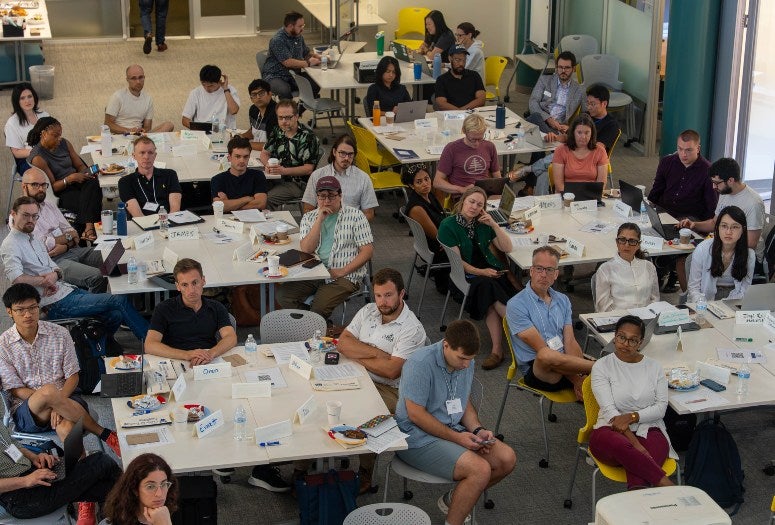
As Rice University continues a period of booming growth, its newest faculty members are joining the university at a moment of transformation marked by rising enrollment, new academic programs, expanding global partnerships and a growing physical campus.
President Reginald DesRoches welcomed the new faculty during the annual two-day faculty orientation, emphasizing that the university’s growth over the past several years has been driven not only by numbers or new buildings but also by the people who will shape Rice’s future.
He welcomed 28 new tenured and tenure-track faculty members and 22 nontenured faculty members who will begin teaching and conducting research at Rice this academic year. They join more than 200 tenure-track faculty who have come to Rice since 2021.
“Each of you brings new ideas, new perspectives and new possibilities to the university, and we’re fortunate you’ve chosen to build the next chapter of your career with us here at Rice University,” DesRoches said.
The welcome comes as Rice has grown significantly in recent years. Over the past four years, undergraduate and graduate enrollment have each increased by about 20%. DesRoches noted that when he began at Rice, the incoming class numbered about 1,000 students. This year, the university welcomed 1,400 new students, including a record-number of freshmen and approximately 50 transfer students.
That growth has been accompanied by a corresponding expansion of the faculty with hundreds joining the university over the past two years. The strategic hiring has allowed Rice to maintain and even slightly improve its low student-faculty ratio as enrollment has increased.
The growth reflects a deliberate effort to strengthen the university’s academic enterprise while expanding its reach.
“We’ve grown thoughtfully and strategically,” DesRoches said, pointing to new academic programs, deeper relationships with Houston and the Texas Medical Center and an expanding international reach that now includes a new presence in India and growing operations in Europe through Rice’s Paris and Venice campuses.
The expansion is guided by Rice’s strategic plan, Momentous, which centers on innovations in health and medicine, building sustainable futures and helping urban communities thrive with responsible artificial intelligence and an empowered campus culture woven throughout the university’s work.
The campus’s physical transformation is equally visible. DesRoches pointed to the recent opening of Sarofim Hall, the construction of a new student center and the expansion of the business school. Rice also recently welcomed students into two new residential colleges, Chao and Lovett, while the Gateway Project is poised to transform the west side of campus and strengthen connections between Rice and Rice Village.
For DesRoches, one of the university’s most important investments remains its faculty.
“Buildings, programs and partnerships alone do not define a great university,” he said. “Faculty do, and that’s why I’m so excited to be here and welcome you.”
The newest faculty members will play a central role in ensuring that Rice’s growth translates into greater impact in the classroom, the laboratory and beyond.
“Your scholarship will expand the boundaries of what we know,” DesRoches said. “Your creativity will open new avenues of inquiry.”
He also underscored the faculty’s role in Rice’s longstanding commitment to educating the whole student. Beyond preparing students to become accomplished scholars and professionals, Rice seeks to develop thoughtful citizens, compassionate leaders and courageous problem-solvers.
“Your teaching and mentorship will shape how our students see themselves, their field and their capacity to improve the world,” DesRoches said, “often in ways that you may not immediately realize in the classroom.”
As Rice grows, DesRoches said, maintaining the university’s culture will be just as important as expanding its programs, facilities and reputation. Rice’s values — responsibility, integrity, community and excellence — should guide how faculty teach, conduct research, mentor students and work with colleagues.
“Those shouldn’t be just words on a wall,” he said. “They show up in everything that we do, how we teach, how we do our research, how we mentor students, support colleagues and how we engage respectfully and thoughtfully, even when we disagree.”
Day 1 of orientation continued with presentations from the university’s leadership and key departments to help the participants gain a deeper understanding of Rice’s culture and the collaborative efforts of its many offices.
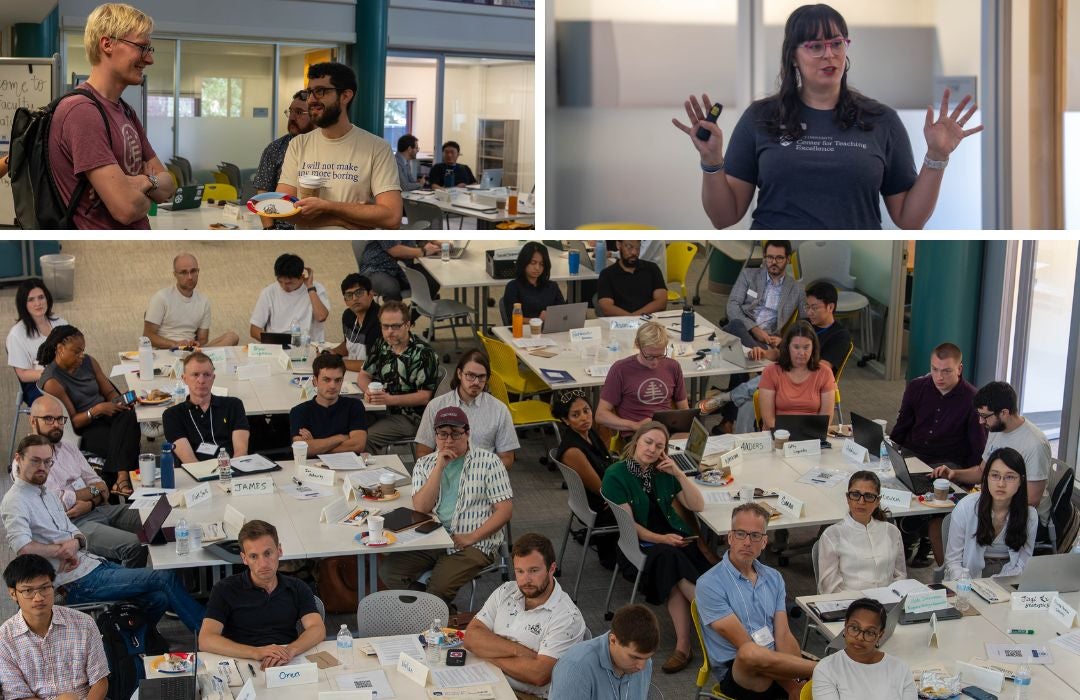
Day 2 was facilitated by the Center for Teaching Excellence, and it included sessions to enhance the faculty’s understanding about teaching at Rice and how to support both inclusivity and student success.