
For more than six decades, Rice University’s Lovett College has been known affectionately — and sometimes teasingly — as the “Toaster,” the distinctive 1960s-era building that generations of Lovetteers called home.
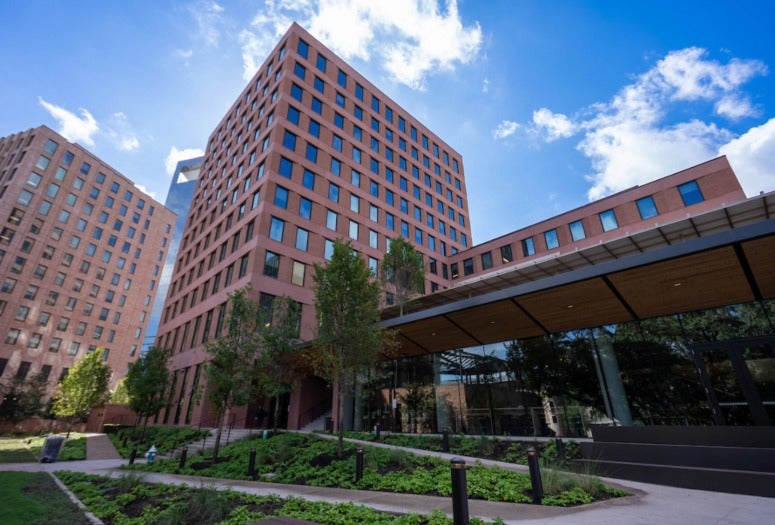
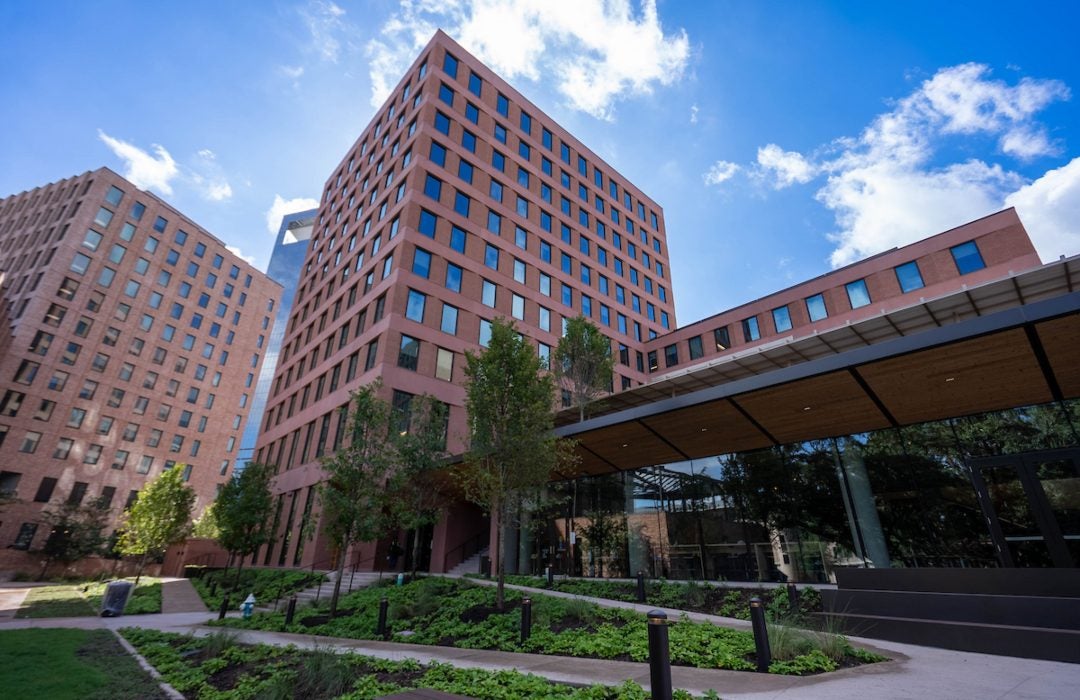
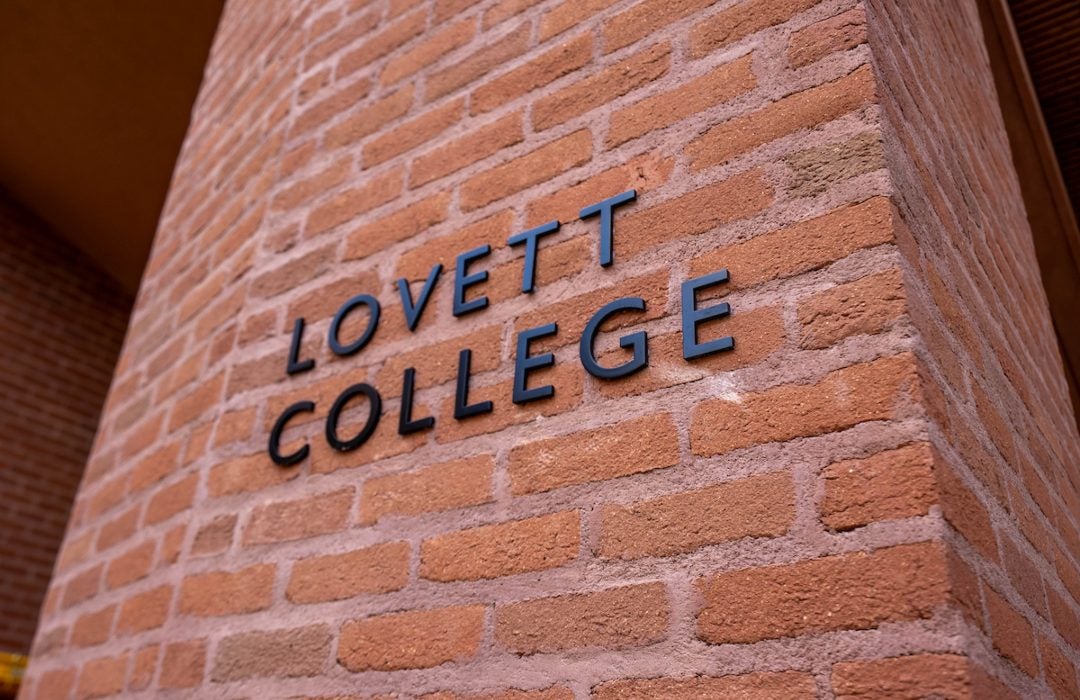
Now, Lovett has a new home. The college has moved into a new 11-story building on campus, trading the familiar quirks of the Toaster for abundant natural light, new gathering spaces, study lounges and a one-of-a-kind elevated outdoor space known as the Sky Quad.
For Lovett students who helped shape the transition, the move is both exciting and nostalgic. As the first students settle into the new building, one theme keeps emerging: Lovett’s identity was never about the building; it was about the people inside it.
“It’s very bittersweet,” said Ricky De Quevedo, a junior who was heavily involved in decisions surrounding the move. “I had really found my home at the Toaster.”
De Quevedo said he quickly realized that Lovett’s identity could move with its students. “What makes Lovett so amazing is not the spaces but the people themselves,” he said.
Bringing Lovett along
The decision to move Lovett was made after the university evaluated what it would take to substantially renovate the old building. Such an overhaul would have required more than a full calendar year and displaced two classes of students, said Bridget Gorman, dean of undergraduates and vice provost for student life.
Rather than undertake such a disruptive renovation, Rice decided to move Lovett into a new home atop the ground where Sid Richardson College used to sit.
Junior Ava Carson says she remembers the mixed emotions when the move was first announced.
“On the one hand, we were worried about losing the culture that sort of came from the camaraderie of this ancient bomb-proof building that was the iconic Toaster,” Carson said. “On the other hand, we were really excited about a facilities upgrade.”
The new building offers features Lovett students never had in the old building, including a rooftop pickleball court, amped up quad space and a basement weight room.
But students also have been deliberate about preserving the visual reminders and inside jokes that give Lovett its identity.
Carson pointed to handprint murals, college-themed furniture and paint colors as examples of the ways students have brought the old building’s personality into the new one.
Even the building has received a new nickname.
“We’re calling our new building the ‘Brick,’ making sure that we still had some iconic kind of silly name that we could theme around,” Carson said.
The commons remains the heart
If natural light is one of the most visible changes, the commons may be the most important cultural challenge.
Lovett has long been known for its unusually strong commons culture. Students gathered in the old building’s commons to eat, study, socialize and hold events — often at all hours.
That culture developed in part because of the unusual design of the Toaster. Old Lovett had no traditional interior hallways and historically had few floor lounges, Carson said. Students who wanted to study somewhere other than their rooms, play video games or simply find a comfortable place to sit had to make their way to the centralized commons. That helped create a culture in which students met one another in their shared area rather than on individual floors, and it’s one of the traditions students are most determined to preserve.
Junior Kate Schwall remembers leaving the commons for a flight at 3 a.m. and still finding students there.
“There’s someone playing Super Smash Bros. in the commons. There’s someone doing homework all of the time,” she said.
The new building gives students more comfortable rooms and additional floor lounges, which creates a new question: Will students still leave those rooms and gather together?
Schwall said upperclassmen are already thinking about how to encourage the next generation to maintain the tradition.
“The new students don’t understand that they don’t know what we’ve had,” De Quevedo said. “So it’s up to us to really teach that.”
Senior Bruce Hurley, Lovett’s president, said the challenge is especially important because some of the physical characteristics of the Toaster that helped foster community are gone.
In the old building, suite-style rooms brought four students together through shared bedrooms and bathrooms. Hurley said the arrangement naturally encouraged students to venture into common areas and meet people beyond their roommates.
“It brought four people together that probably didn’t know each other beforehand,” Hurley said. “We won’t get that in this building, but I’m hoping with the layout of the rooms and also the floor lobbies that we can have that kind of community building.”
New spaces, old traditions
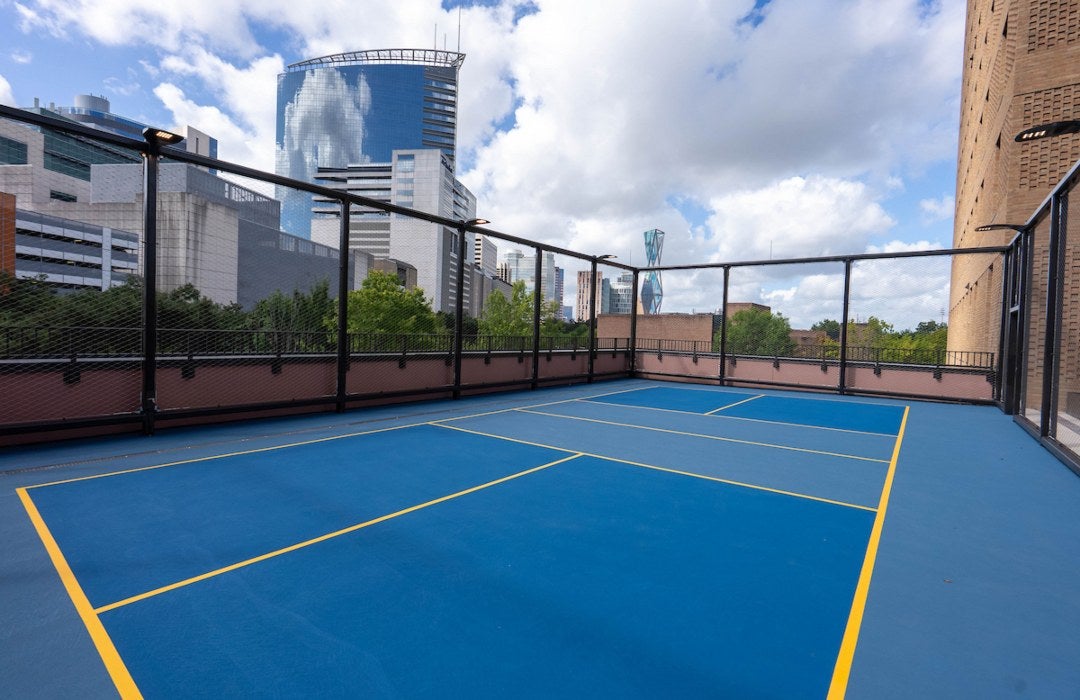
The new building’s design gives Lovetteers an opportunity to rethink how they gather. Perhaps the most intriguing example is the Sky Quad, a second-floor outdoor gathering space that gives the college something unique.
The elevated quad includes a pickleball court and room for additional outdoor furniture and gathering areas.
De Quevedo said students have already suggested picnic tables, chairs, swings and string lights to make the space a destination, particularly in the evenings when Houston temperatures become more manageable.
“There’s just so much potential for what could happen up there,” he said.
Gorman was initially unsure about the concept when she first saw the design. But watching the students’ reaction changed her mind.
“They showed me the designs, they talked to me about it, and they kind of won me over,” Gorman said.
Carson said students are also working to preserve smaller, distinctly Lovett traditions — even when they make little sense to anyone outside the college.
One example is the names of the two commons.
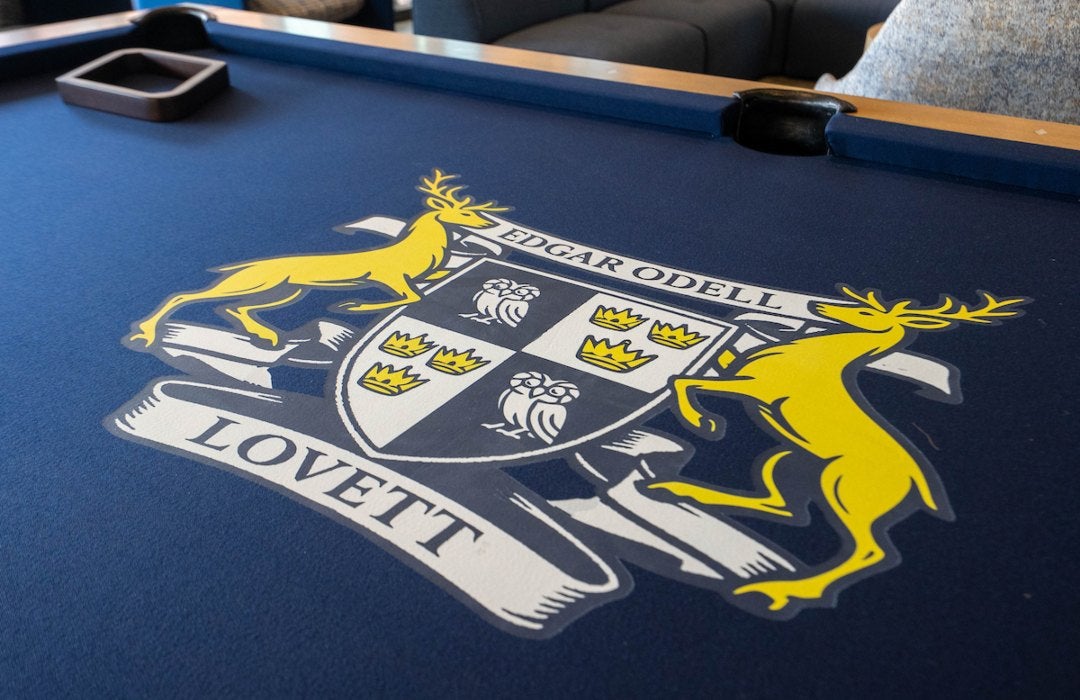
In the old building, the upper commons was primarily a dining space, while the lower commons featured couches, televisions, video games and pool tables.
In the new building, those physical relationships have been reversed, so students are reversing the names, too. The first-floor dining area will be called the “Upper Commons,” while the second-floor recreational area will be called the “Lower Commons.”
“It might be wildly confusing,” Carson said. “We’re going to see if it can catch on. If not, it may go out the window after a year or two of utter chaos.”
For Lovetteers, that kind of quirkiness is part of the point.
Finding a new voice
The move has also forced students to reconsider something as seemingly simple as how other Rice students will recognize them.
For years, Lovett’s cheers and chants have played off the Toaster.
“Almost all of Lovett’s cheers for years past were themed around the building,” Carson said. “People walk by us and they go ‘Toast’ or ‘Toaster’ to sort of make fun of us for that building.”
Now there is a new building — and a new nickname — but not yet a new set of cheers. Students are beginning the process of creating them.
“We don’t have cheers. People don’t know what to call us, what to do with us,” Carson said. “So we’re sort of looking around, trying to actively find those new gimmicks and making them where we can.”
Remembering the Toaster
Even as Lovetteers embrace their new home, they are taking deliberate steps to preserve the history of the old one.
De Quevedo has been working with the Lovett Government Props Committee on a project called the Lovett Museum.
As students cleaned out the old building, they discovered memorabilia that had accumulated over generations, including old T-shirts and other artifacts. Alumni also donated items.
The plan is to create a display in the new building where current students and alumni can encounter pieces of Lovett’s past.
“The Lovett identity has been so intertwined with the Toaster that I think it’s really essential that we have something here that future generations can look at and say, ‘Oh, this was the Toaster,’” De Quevedo said.
The project may eventually expand into a virtual museum featuring photographs and oral histories from generations of Lovett alumni.
Hurley said students are also grateful they have been able to bring furniture and other items from the old building into the new one.
“We want to stay true to everything that existed in the Toaster and made our community so strong,” he said. “I think just trying to live out the Lovett experience in these new spaces is just going to be something that we need to figure out.”
Naoko Ozaki, a Lovett residential assistant and lecturer in Japanese, said students are already finding small ways to carry the old Lovett into the new building, even when the architecture makes that difficult.
“We just have to bring the culture to the new building,” she said. “That’s a little bit challenging because we still don’t know how the new space is going to work.”
A nod to the past
Lovett’s construction team salvaged the basement of the former Sid Richardson tower, which has been repurposed for mechanical, electrical, plumbing and life safety equipment. The remnants also provided an interesting bit of Rice history uncovered when excavating the site to pour the concrete piers and structure.
“We found an old cistern with hundreds of items we have handed over to the archaeology department of old glass ink bottles, other Rx bottles and Rice smallwares like soap trays and plates with the Rice shield,” said Florence Tang ’09, senior project manager with Facilities, Planning and Capital Construction.
One more find was the crest of Sid Richardson on a concrete wall that the team left undisturbed and in place despite it now existing on Lovett territory.
“We built upon the roots of Sid to become what is now the new Lovett, [which] might just continue the rivalries,” Tang said, referencing the “jacks” or pranks that the colleges occasionally play on each other.
Old Lovett, new purpose
Lovett’s previous building has been renamed “Main Street Residence” and will remain available for undergraduate housing for the immediate future.
For the 2026-27 academic year, a portion of Main Street Residence’s rooms have been made available to rising sophomores at Baker and Lovett Colleges to help facilitate the transition of having juniors living off campus.
Any remaining spaces are open to all rising sophomores, juniors and seniors who participated in their college’s housing draw but did not receive a room.
Students assigned to Main Street Residence will retain full membership in their home college and will continue to be supported by their college core teams. Mail will be delivered to their home college, and those living in Main Street Residence are encouraged, but not required, to dine at their home college’s servery.
Main Street Residence will operate as on-campus apartment-style housing rather than as a residential college. The basement level has fully transitioned to the Department of Housing, Dining and Hospitality operations and will not be accessible to students.
Part of a bigger plan
The move comes during a period of significant growth and investment at Rice, and Gorman sees the new residential colleges as part of a broader commitment to the undergraduate experience.
Residential colleges, she said, are more than places for students to live. They are centers for leadership, personal growth and community.
“A really important hub of learning and leadership development and growth occurs within the college spaces,” Gorman said.
For De Quevedo, the growth of Lovett itself makes the transition particularly exciting. The college is welcoming more freshmen than ever, he said, bringing new people and new ideas.
“With that comes new traditions and new possibilities for what Lovett can become while still preserving what we are,” he said.
That balance — preserving the past while making room for something new — may ultimately define Lovett’s transition.
The Toaster gave Lovett its distinctive physical identity, but its students gave the building its soul. Now those students are carrying that soul across campus.
As Carson put it, Lovetteers are not simply moving into a new building. They are figuring out how to make it theirs — one tradition, inside joke, gathering and new cheer at a time.