A new monograph published in Foundations and Trends in Machine Learning, Yueyang Liu, assistant professor of operations management at Rice Business, and co-authors at Stanford University argue that forgetting is not simply a bug for AI. In real-world settings, these systems face hard constraints on memory and computing power. They cannot, and should not, try to remember everything.
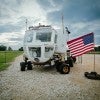
Rice’s OWL SUITS team, led by members of the Rice Augmented Reality/Virtual Reality Club, was selected for NASA SUITS, a national software design challenge that invites college students to develop interface solutions for future human spaceflight.
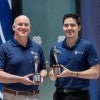
Rice is a double winner in the 47th annual Telly Awards, which honor excellence in video and television. The university won a silver Telly in the Education and Discovery category for a social media series titled “Discovering Materials Science and Engineering: Engineering Solutions for a Changing World,” which followed freshmen as they were introduced to how materials shape the world in a materials science and nanoengineering course of the same name. Additionally, Rice won a bronze Telly in the Educational Institution category for a nonbroadcast campaign titled “RAMI Undergraduate Research Fellows at Rice University,” which showcases cutting-edge undergraduate research.
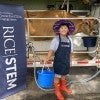
Nearly 30 fourth and fifth grade students got a firsthand look at where milk comes from July 16 when a dairy cow named Luna visited Rice University as part of the Center for STEM Engagement’s new C.H.E.F. Lab (Creating Hands-on Experiments in Food Science).
Rice professor Pernilla Wittung Stafshede recently served as a co-organizer of the 75th Lindau Nobel Laureate Meeting, where she co-represented the field of chemistry.
Hans Renata’s team recently developed a method that significantly reduces the cost of adding thiophosphate to chemical structures, opening up new pathways for drug design.
When Houston served as host city for the FIFA World Cup 2026, Rice University helped extend the tournament beyond the stadium by creating opportunities for students, faculty, staff, alumni and the broader community to take part in one of the world’s largest sporting events.
Two Rice research teams have received Phase I awards through the U.S. Department of Energy’s Genesis Mission, a national initiative harnessing artificial intelligence and advanced computing to accelerate scientific discovery.
LumiStrain, a Rice spinout commercializing a Strain Sensing Smart Skin (S4) for structural testing and health monitoring, has received a $1.55 million award through the National Science Foundation’s Small Business Innovation Research Fast-Track program.
Rice bioengineer Michael King and his team recently published a paper demonstrating that this ability to survive high-stress environments, or mechanoresistance, can be induced in prostate cancer cells.
The Moody Civic Immersion program is a weeklong experience run by Rice’s Center for Civic Leadership that brings incoming students into the city before their first semester begins.
Rice mechanical engineers and Baylor College of Medicine neurosurgeons have identified simple changes to surgical tools that could reduce strain on the esophagus and potentially lower the risk of swallowing difficulties after neck surgery.