
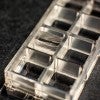
Improved precision microscopy method developed by Rice professor
Rice’s Anna-Karin Gustavsson published a method in Nano Letters expanding the use of light sheet microscopy to include a single objective in commercially available sample chambers.
Improved precision microscopy method developed by Rice professor
Rice’s Anna-Karin Gustavsson published a method in Nano Letters expanding the use of light sheet microscopy to include a single objective in commercially available sample chambers.

Rice researchers find evidence of true polar wander
Rice researchers find evidence of movement in the Earth's spin axis 56-48 million years ago.
Rice researchers discover magnetic liquid crystal state in rare earth compound
In a recent study published in Physical Review X, Rice researchers showed YbMnBi₂'s magnetic spins prefer certain directions even when fluctuating.

New catalogs map quantum possibilities of atomically thin materials
In two papers published in Science Sept. 24, an international collaboration provides both the building blocks and a guide to the search for families of twistronics.

Rice community mourns Maxwell Plummer, mathematics graduate student
Maxwell Plummer, a fifth-year doctoral candidate in Rice’s mathematics department, passed away the week of Sept. 7. He was 26 years old.

New method identifies leukemia drug candidates and target
Rice's Natasha Kirienko developed a new screening method that identified drugs that target leukemia cells without unduly harming healthy cells.

Securing tomorrow: Rice hosts key leaders for inaugural summit on quantum and national security
Rice’s Defense Research Advancement initiative and the Smalley-Curl Institute recently hosted the inaugural Quantum Frontiers Summit, a first-of-its-kind gathering that brought together leaders from industry, academia and government to build a collaborative future vision for the rapid evolution of cutting-edge quantum technologies.
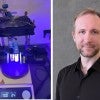
Researchers develop inexpensive, fast and environmentally friendly method for organic synthesis
Rice’s Julian West has been developing a less expensive, faster and more environmentally friendly way to catalyze carbon bonding to carbon-carbon double bonds with a breakthrough recently published in the journal Nature Catalysis.

New method turns harmful environmental waste into useful synthetic reagent
James Tour’s lab developed a method to capture the fluoride from these waste streams and recycle it into a useful reagent, silver fluoride, that could be used in other manufacturing processes.

Rice’s new Center for Space Technologies aims to accelerate Texas space innovation with $14.1M grant
Rice's new Center for Space Technologies, or CSTx, is strengthening Texas’ leadership in the space economy, supported by a $14.1 million Texas Space Commission grant.

Rice to lead first national research security survey
Rice’s Tam Dao and Kenny Evans have received a federal grant to investigate the scope and frequency of foreign influence in U.S. institutions.

Smalley-Curl hosts 40th annual colloquium to ‘encapsulate Rice’s interdisciplinary drive’
Rice’s Smalley-Curl Institute recently hosted its 40th annual summer colloquium.
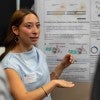
Undergraduate researchers showcase a summer of discovery
Rice’s 2026 class of summer undergraduate researchers gathered at the BioScience Research Collaborative last week for the Summer Undergraduate Research Symposium, hosted by the Office of Undergraduate Research and Inquiry.
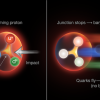
Scientists uncover new clue to how protons maintain their identity
New results from the STAR detector at the Relativistic Heavy Ion Collider (RHIC) suggest that gluons, the gluelike particles that hold quarks together inside protons, play a central role in the conservation of baryon number, an essential part of a particle’s quantum identity.

Rice professor advises computational chemistry researchers to prepare for new AI tools
David Sholl, Rice’s executive vice president for research and professor of chemical and biomolecular engineering, recently published an opinion piece in ACS Central Science, where he and co-author Andrew Medford, associate professor of chemical and biomolecular engineering at Georgia Institute of Technology, share their perspective on machine learning tools expected to bring radical changes to the field of computational chemistry.