
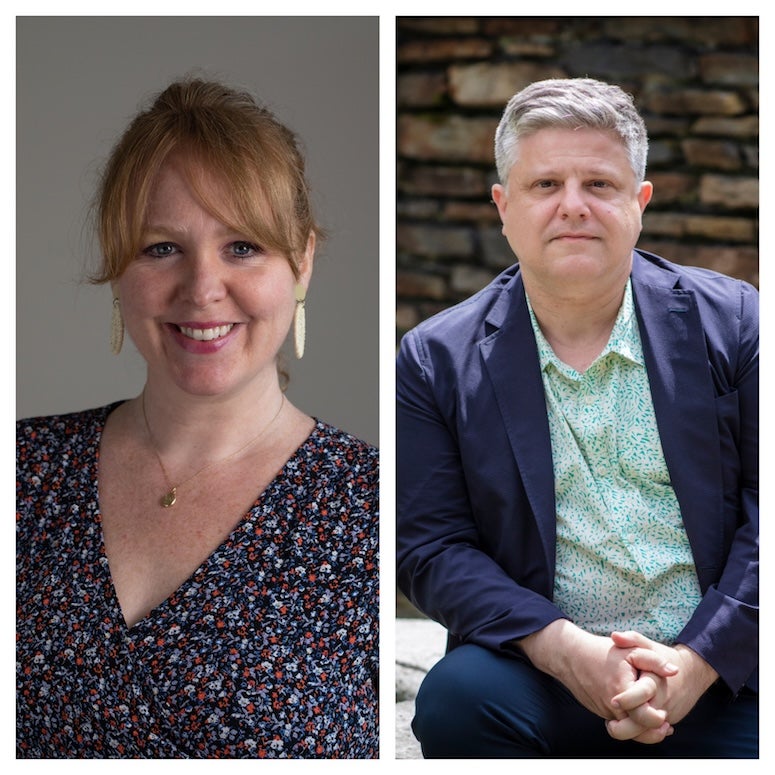
There is a plethora of data about the impacts climate change has on human health. But one of the main challenges facing researchers, health practitioners and policymakers is how to translate that data into meaningful action for the communities they serve. To address this, a team of climate and environmental scientists, educators, epidemiologists and infectious disease researchers from Rice University, Baylor College of Medicine and the University of Texas School of Public Health has been awarded the inaugural Burroughs Wellcome Fund’s Climate + Health Excellence (CHEX) award, an initiative designed to strengthen research, education and public engagement related to climate change and human health. Rice professors Sylvia Dee and Joseph Campana, co-investigators on the grant, will lead efforts turning environmental data analysis and education efforts into community health resilience in the face of a changing climate.
Based in Durham, NC, the Burroughs Wellcome Fund is an independent private foundation. Its mission is to serve and strengthen society by nurturing a diverse group of leaders in biomedical sciences to improve human health through education and powering discovery in frontiers of greatest need. The $10 million CHEX award will be used over the next five years to build FORECAST, an integrated system to study how a rapidly changing environment and weather drive the emergence and expansion of deadly pathogens in human populations.
“This work will transform how we approach climate change and human health research,” said Dee, an associate professor of Earth, environmental and planetary sciences at Rice. “This grant supports novel research linking climate change projections to health care solutions while simultaneously ensuring the next generation of scientists, leaders and policymakers have the training to assess and respond to the climate change risks that we already know are increasing every year.”
The grant will leverage Rice’s deep expertise in, and powerful network of, scholarship, education and outreach to develop and provide training and curricula. On Rice’s campus, the grant will support educational pathways in environmental health, a rare but desired opportunity for undergraduate students in the United States. This will include a new Center for Climate and Environmental Health, as well as extensive cross-campus multidisciplinary collaborations criss-crossing between the sciences and the humanities fostered by seed grants, postdoctoral and graduate positions, and more.
“Education, outreach and communication, expertise we find in humanities, are critical for a meaningful transition into impact,” said Campana, Rice’s William Shakespeare Professor of English and the director of the Center for Environmental Studies and EcoStudio. “It is only through a humanities and STEM collaboration that we can analyze and build community trust in the data while effectively communicating how we can resiliently respond to growing climate challenges.”
Outside of Rice, the educational efforts will prepare students across Houston for upcoming climate challenges, including a “Middle to Medical” school climate-health educational pathway that will focus on teaching how pathogens spread and become dangerous, and how that process is worsened by climate change.
“FORECAST will prepare youth across Texas to make informed health decisions that protect themselves and their families and communities from extreme weather and disease-related risks,” said Nancy Moreno, a professor of education, innovation and technology at Baylor College of Medicine and co-investigator on this grant.
On the data analysis front, researchers will be using a number of large datasets, contributed from a variety of collaborators, covering everything from climate patterns to pathogen levels to health outcomes. Anthony Maresso, principal investigator and professor of molecular virology and microbiology at Baylor College of Medicine, will bring expertise in viral pathogen sewage detection developed during the COVID-19 pandemic.
“The science developed from this award will be used to identify never-before-seen relationships between deadly pathogens and the environmental drivers that allow them to enter human populations while simultaneously teaching the next generation of microbe hunters and environmental scientists how these two topics are linked,” Maresso said.
Complementing that expertise is the Texas Wastewater Environmental Biomonitoring Network, a statewide surveillance program developed directed by Eric Boerwinkle, dean of the UT School of Public Health and co-investigator on the grant.
“Hotter days, bigger storms, new disease threats — Texas’s future demands preparation. With support from the Burroughs Wellcome Fund, the FORECAST team is helping Texas detect threats earlier and respond faster, saving lives and strengthening our economy,” said Boerwinkle.
FORECAST brings resiliency in Houston and exciting changes to Rice. The new center and educational pathways will give researchers and students meaningful opportunities to connect environmental health to their research and future career paths. With this grant, future doctors, policymakers, artists and scientists will be able to fully understand how we can address the climate challenges facing us on every level.