
The research community relies on collaboration and communication, sharing findings, questions and feedback across department, university and global boundaries to advance discoveries. The digital age’s advances in communications have, for the most part, greatly benefited the research community. But with the ease of communicating comes concerns about information being shared without permission, for noncollaborative purposes. Universities in the United States are now looking at how to establish appropriate research security in response to these concerns while maintaining critical global communications and collaborations.
“Rice is a national leader in both research and research security with strong, growing international partnerships,” said David Sholl, Rice University’s executive vice president for research. “We are uniquely positioned to investigate research security with scientific rigor and then use those findings to advocate for sensible and effective policy development.”
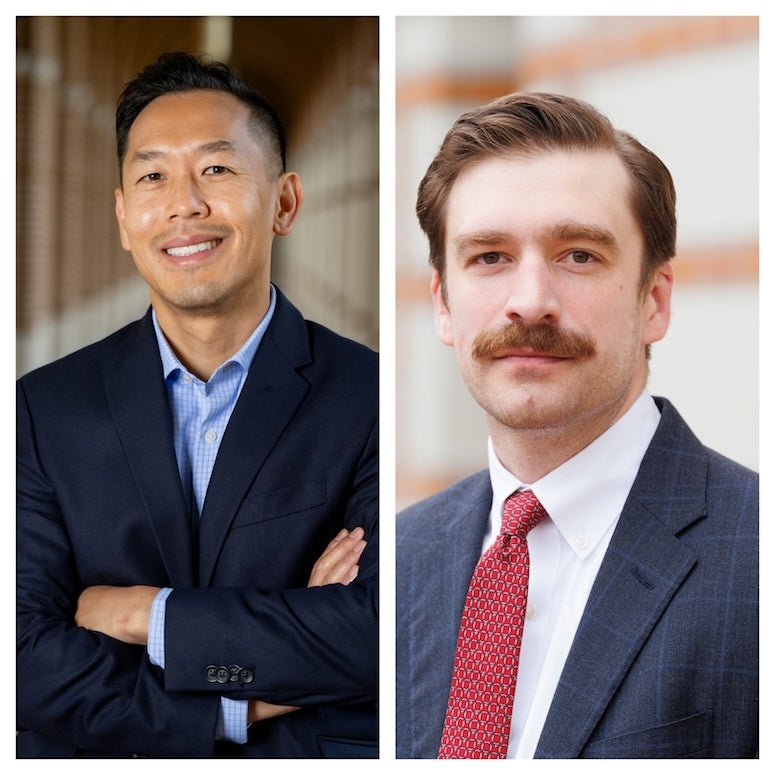
That is the goal of the National Science Foundation grant recently awarded to Rice’s Tam Dao, associate vice president of public safety and research security, and Kenny Evans, a fellow in science, technology and innovation policy at the Baker Institute of Public Policy. In collaboration with Randolph T. Stevenson, the Radoslav Tsanoff Professor of Public Affairs at Rice, and co-principle investigator Claudia Neuhauser, the vice president/vice chancellor for research at the University of Houston, they are interested in determining the scope and frequency of foreign influence in U.S. institutions in response to several well-publicized incidents that have driven increases in research security regulations. The findings will be used to develop policy recommendations that balance the need for security with the importance of international collaboration.
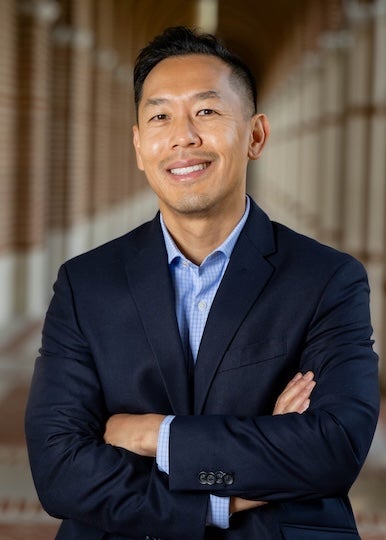
“There have been a few high-profile cases that really prompted an increase in requirements for research security on federally- and state-funded research programs,” said Dao, who has firsthand knowledge after serving as the lead FBI special agent on many of those investigations starting in 2015. “But we currently lack an understanding of the actual depth and breadth of the issue, which is key to forming well-informed, well-reasoned policies.”
In 2018, the U.S. Department of Justice launched an initiative to identify undue foreign influence in the academic research enterprise. While several high-profile cases highlighted the need for new research security rules, very few involved espionage. The initiative and research security policies that followed created uncertainty about how researchers could appropriately collaborate with scientists in other countries. Dao recently testified on these and other concerns in front of two state legislative committees reviewing the implementation of a recently passed research security bill in Texas.
“Universities need clarity in research security policies,” Neuhauser said. “That clarity comes from a better understanding of foreign influence — are we seeing isolated incidents, indicators of a larger systemic issue with foreign influence or something in-between?”
Better understanding of the issues is key to building clear and effective research security policies that reduce the risk without unduly preventing collaborative research.
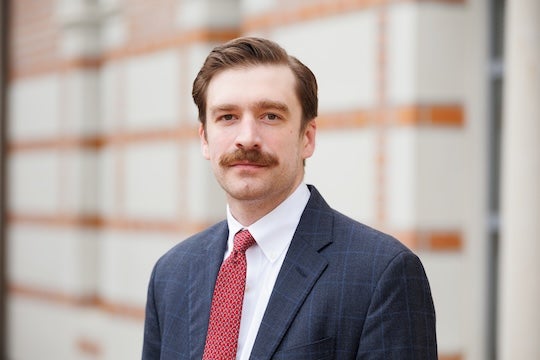
“Universities are spending an enormous amount of time and resources working to comply with federal policy, and the rules continue to change,” Evans said. “Right now, we don’t have an understanding of how new research security policies are affecting the health and competitiveness of the U.S. research enterprise. Research institutions need clear guidelines that reflect the scale and scope of research security issues on campuses — we simply don’t know how big of a problem security issues really are.”
The grant enables the research team to conduct a national survey measuring the frequency of foreign influence in U.S. academia. It will explore whether researchers across various disciplines have encountered tactics such as coercion, deception, intellectual property theft or inappropriate rewards.
The sensitive nature of the information means that the survey design is key to capturing accurate information. Stevenson brings expertise in survey design, particularly in cases where people may be hesitant to share their experiences. This survey will be designed using a version of the crosswise model developed by Stevenson and collaborator Yuki Atsusaka in 2021.
“This survey will be rigorous, validated and crosscutting,” Stevenson said. “It’s the first step to developing well-informed research security policies and as such critical that we use every tool at our disposal to get accurate, representative information.”