
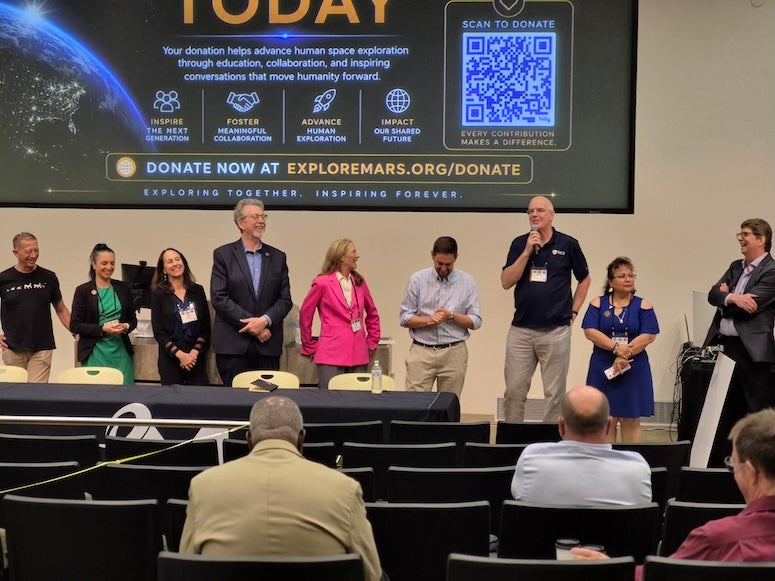
The 2026 Humans to Mars and the Moon Summit (H2M2), hosted by the nonprofit Explore Mars, was recently held at Rice University’s BioScience Research Collaborative. This annual summit, held this year for the first time in Houston, brings together scientists, astronauts, entrepreneurs and experts from a variety of fields to explore solutions.
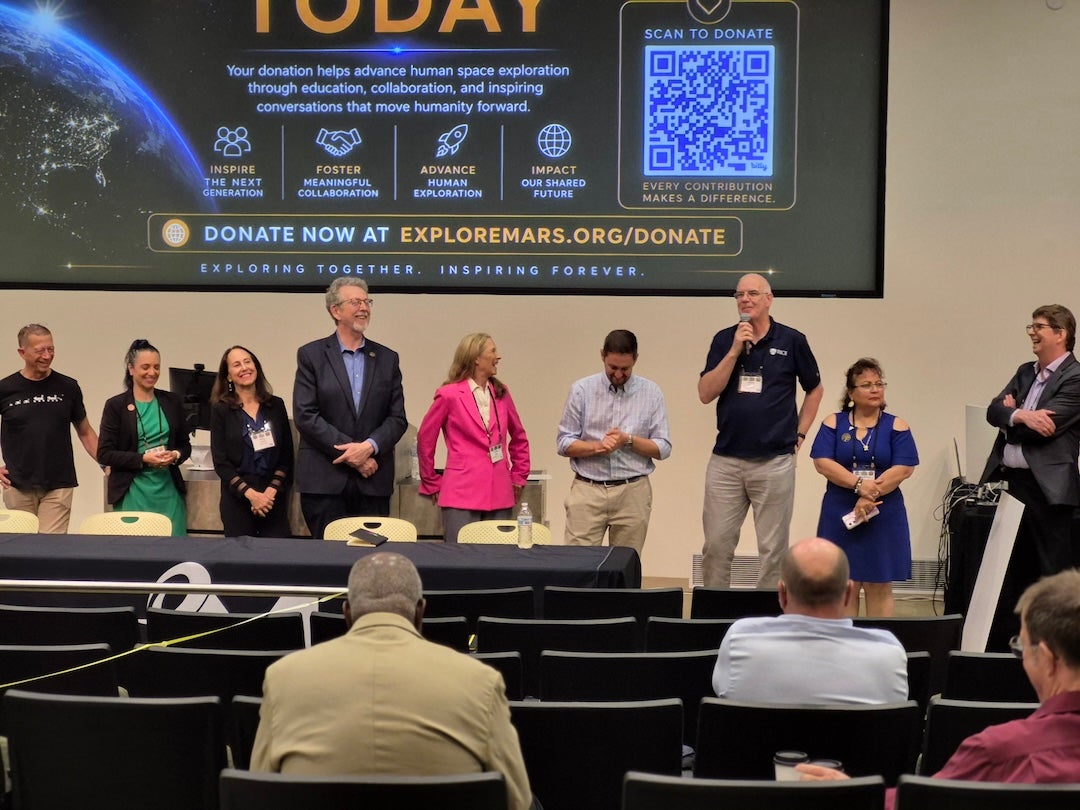
“I was excited to help Explore Mars bring H2M2 to Houston,” said David Alexander, professor of physics and astronomy and director of the Rice Space Institute. “The space ecosystem in Houston, of which Rice is an integral part, is a natural home for this summit. H2M2 intentionally sparked incredible discussions, which are continuing long past its last session.”
In fact, the 2023 summit was part of the inspiration for Rice professor Scott Solomon’s recent book, “Becoming Martian.” Such conversations are an integral part of H2M2 and a major goal of Explore Mars.
“There are so many professions integral to bringing humans to Mars, such as plumbers, mechanists, food scientists, human health experts and policymakers,” said Chris Carberry, CEO of Explore Mars. “Explore Mars, through initiatives like H2M2, is bringing people out of those silos and into conversation with each other as we face the incredible challenges space presents.”
In the Food on Mars panel, for example, astronauts, food scientists, physicians and industry professionals discussed the cultural, logistical, safety, social and nutritional aspects of food, touching on everything from the importance of culturally specific food items to the logistics of bringing food to the International Space Station to how food could be successfully and safely be grown and consumed in a Mars community.
“We are all passionate about space,” said alumna Linda Delgado Libien ’24, who works for the Rice Space Institute and with Mexanauta, a Latin American space education nonprofit. “H2M2 gave me the opportunity to immerse myself more into the private space sector and its rapid integration with NASA. And I also love talking to other space people.”
This passion for space was apparent throughout the summit, from its panelists to its audience. Equally apparent was the drive to welcome new people into the space community, inviting them to imagine how their work could fit into the space ecosystems and, by doing so, benefit Earth.
“One of the things I love about innovating for Mars is that it forces us to solve big problems for Earth,” said Tiffany Vora, president of Explore Mars. “How do we solve for renewable energy when there’s no oil as a backup? Or solve for food waste when we can’t just burn it and grow more? Getting to Mars will radically change how we interact with the Earth. And the Rice community, particularly your students and your innovators, is well positioned to take on these challenges and turn them into opportunities.”