More than 160 leaders in neurotechnology, neuroscience, neuroengineering and neurosurgery attended InterfaceRice 2023, the inaugural conference of the Rice Neuroengineering Initiative, May 18-19.
Researchers from Rice and Baylor College of Medicine are developing a first-of-its-kind “glyco-immune” checkpoint inhibitor for breast cancer survivors who develop metastatic bone cancer.
The Rice360 Institute for Global Health Technologies presented its 2023 Global Champion Award to philanthropist Jan Duncan and its 2023 Alumni Leadership Award to physician Elizabeth Spiegel ’11 at its graduate recognition and awards breakfast May 5.
Rice University scientists identified three biomaterial formulations that could help develop a more sustainable, long-term, self-regulating way to treat Type 1 diabetes using a new screening technique that involves tagging each biomaterial formulation in a library of hundreds with a unique “barcode.”
Rice bioscientist James Chappell has won a National Science Foundation CAREER Award to develop RNA programming methods that can improve human health and the environment.
With the $1.8 million in support, Mechanical Engineering's Lillehoj looks to develop a CRISPR-Cas13-based rapid HIV-1 test and a serological test for detecting Chagas.
Rice University scientists enlist widely used cancer therapy systems to control gene expression in mammalian cells, a feat of synthetic biology that could change how diseases are treated.
Rice bioengineers teamed up with tropical medicine experts from Tulane to invent a high-tech way to study the feeding behavior of mosquitoes. To eliminate the need for live volunteers, the system uses patches of "synthetic skin" made with a 3D bioprinter.
Rice University structural engineer Jamie Padgett has received the 2023 Edith and Peter O’Donnell Award in Engineering from The Academy of Medicine, Engineering and Science of Texas.
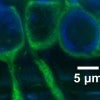
Rice bioengineers and applied physicists, together with and colleagues at the University of Chicago and the University of Illinois Chicago, have unlocked the mechanism of the fastest synapses in the human body.
A previously hidden mechanism in the inner ear that helps mammals balance via the fastest-known signal in the brain, and researchers from Rice University, the University of Chicago and the University of Illinois Chicago have modeled a hidden mechanism in the inner ear that helps mammals balance via the fastest-known signal in the brain.