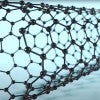
An international team of scientists led by Rice’s Matteo Pasquali has won a $4.1 million grant to optimize carbon nanotube synthesis. The award is a joint effort by The Kavli Foundation, with a $1.9 million Exploration Award in Nanoscience for Sustainability, and Rice’s Carbon Hub, which contributed an additional $2.2 million.
Rice experiments have provided the first direct evidence that electricity seems to flow through “strange metals” in an unusual liquid-like form. The first “shot noise” experiments on a strange metal from the Vienna University of Technology (TU Wien) are detailed this week in Science by physicists from both universities.
Rice’s Santiago Segarra and Ashutosh Sabharwal have won a grant from the DEVCOM Army Research Laboratory to develop a machine learning framework that improves military communication networks’ decision-making processes. The research could also help inform applications such as self-driving vehicles and cyber intrusion detection.
A number of Rice University Shepherd School of Music alumni will be up for Grammy gold at the 66th annual Grammy Awards ceremony Feb. 4 at Crypto.com Arena in Los Angeles.
After former President Donald Trump announced the end of the Deferred Action for Childhood Arrivals (DACA) program in 2017, beneficiaries of it experienced significantly higher levels of distress and post-traumatic stress diagnoses than their non-DACA counterparts, according to a new study from Rice University.
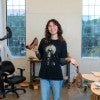
A Rice student used galls — plant tissue growths caused by small wasps — to decorate a pair of shoes as part of an art project, creating some online buzz when a picture of the heels were posted on social media.
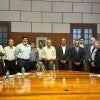
As part of its strategic global initiative, Rice University leadership recently traveled to the Indian Institute of Science (IISc) where the two institutions agreed to collaborate to develop shared research and industry engagement around the themes of data science, energy and materials.
Rice’s Mark Torres and collaborators used rhenium as a proxy for fossil carbon in order to quantify the rate at which Earth naturally releases carbon dioxide into the atmosphere and found that high rates of carbon breakdown persist across the different geographical profiles of a river basin.
Rice scientists have developed a new low-cost, safe and effective process to free up and reattach fluorine to chemical compounds. In pharmaceuticals, fluorine can expand lifetime, increase absorption and minimize side effects.
Rice recently hosted the first International Workshop on Quantum Vacuum in Matter, an event that brought together leading experts in the field from around the world to discuss recent advances, discoveries and research priorities.
The Severe Storm Prediction, Education and Evacuation from Disasters (SSPEED) Center at Rice hosted its 11th annual conference last month at the university’s Anderson-Clarke Center.
A new study by Rice climate scientist Sylvia Dee and an international team of collaborators sheds light on the impact that global temperature variation over the past 2,000 years has had on the planet’s hydrological cycle.