

Solar energy collectors grown from seeds
Rice University engineers have created microscopic seeds for growing remarkably uniform 2D perovskite crystals that are both stable and highly efficient at harvesting electricity from sunlight.
Solar energy collectors grown from seeds
Rice University engineers have created microscopic seeds for growing remarkably uniform 2D perovskite crystals that are both stable and highly efficient at harvesting electricity from sunlight.
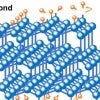
‘Flashed’ nanodiamonds are just a phase
The “flash” process developed at Rice University can turn carbon black into functionalized nanodiamond and other materials. The carbon atoms evolved through several phases depending on the length of the flash.

Juneteenth event addresses Rice's history and topics of African American life
Task force proposes competition to redesign Academic Quad, determine fate of statue.

Odd angles make for strong spin-spin coupling
HOUSTON – (May 25, 2021) – Sometimes things are a little out of whack, and it turns out to be exactly what you need.

Rice celebrates Juneteenth and emancipations to come
Rice’s second annual Juneteenth celebration will bring together professors across the university — from Computational and Applied Mathematics to Modern and Classical Literature and Cultures — for three panels exploring ideas and questions central to the meaning and promise of the important holiday.

Seismic study will help keep carbon underground
A Department of Energy grant to Rice geoscientists enables development of fiber-optic sensors to find and evaluate small faults at underground carbon dioxide storage reservoirs.

Shepherd School presents virtual opera June 24 and 25: ‘L’enfant et les sortilèges’
Magical toys, the spoiled child who torments them and a story of redemption is the focus of "L'enfant et les sortilèges," the Rice University Shepherd School of Music's latest opera production, once again offered in a virtual format due to the ongoing pandemic.

An exhibition opening June 15 at Rice Architecture’s Anderson Hall reveals what’s behind the walls in a typical home, thanks to an award-winning design by visiting critic Liz Gálvez, above. The exhibit, “Of Envelopes and Air,” explains the variety of paths air takes as it enters and leaves buildings and highlights the importance of managing the flow.

Rice lab peers inside 2D crystal synthesis
Scientific studies describing the most basic processes often have the greatest impact in the long run. A new work by Rice University engineers could be one such, and it’s a gas, gas, gas for nanomaterials.

Leaders who embrace on-job learning and listen to employees have more resilient teams
Leaders who encourage their employees to learn on the job and speak up with ideas and suggestions for change have teams that are more effective and resilient in the face of unexpected situations, according to new research from Rice University and the University of Windsor.

Mutual recognition: Brie Ruais moves heaven and earth at the Moody
Earth in all its forms spreads across the Moody Center for the Arts like nature reclaiming a structure after its inhabitants have left. A long streak of smeared clay beginning on one wall at the entrance leads your eye into the Moody’s main galleries, where artist Brie Ruais’ work has transformed them — both inside and out — into new landscapes, rich with color and texture.

A recently arrived Rice University professor preparing to study quantum systems assembled from the ground up with individual atoms has two significant papers on which to build his reputation.
How a medical humanities workshop and coding crash course created a pulse-inspired art exhibition at Rice’s Solar Studios.

f identical versions of 20 people lived out their lives in dozens of different worlds, would the same people be popular in each world?
Absorbent aerogels show some muscle
A simple chemical process developed at Rice University creates light and highly absorbent aerogels that can take a beating.