
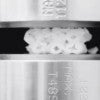
Soft shell makes hard ceramic less likely to shatter
Coating ceramic schwarzites, 3D-printed lattices, with a thin polymer helps keep them from shattering under pressure.
Soft shell makes hard ceramic less likely to shatter
Coating ceramic schwarzites, 3D-printed lattices, with a thin polymer helps keep them from shattering under pressure.
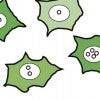
Cell-wrangling circuit simplifies genetic experiments
A Rice alumnus' work pays off with The Equalizer, a synthetic circuit that assures consistent gene expression in laboratory-bred colonies.

NIH grant will help streamline chemical synthesis
Rice University chemist Julian West has won a five-year, $1.8 million National Institutes of Health grant to advance his lab’s efforts to simplify the synthesis of organic chemicals.

Rice sociologist Rachel Tolbert Kimbro named dean of School of Social Sciences
HOUSTON – (March 24, 2021) – Rachel Tolbert Kimbro, an award-winning educator and prolific researcher in the field of children's health, has been named the newest dean of Rice University's School of Social Sciences effective July 1.

Jeffrey Kripal on how to think about the UFO phenomenon
To study the subject adequately is ‘to study pretty much everything’

Flood relocation programs more disruptive to those who don’t live in white or affluent neighborhoods
HOUSTON – (June 29, 2021) – A government policy that removes homeowners from flood-prone areas disproportionately disrupts the lives of residents from less white and affluent neighborhoods, according to new research from sociologists at Rice University and Temple University.

Six Rice-TMC research teams earn seed grants
Rice's Educational and Research Initiatives for Collaborative Health has announced six seed grants for research collaborations between faculty from Rice and the Texas Medical Center.

Keck backs Rice bid to ‘build a brain’
A $1 million Keck Foundation grant will support work by Jacob Robinson to understand neural pathways.

RAMBO speeds searches on huge DNA databases
Rice computer scientists are sending RAMBO to rescue genomic researchers who sometimes wait days or weeks for search results from enormous DNA databases.

Bioengineering department adds single-cell expert via CPRIT grant
The little things of life mean a great deal to Julea Vlassakis, who will bring her study of protein complexes and their role in cancer proliferation to Rice University this year.
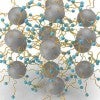
Quantum dots keep atoms spaced to boost catalysis
Rice engineers use graphene quantum dots to trap transition metals for high atom loading in single atom catalysis.

Housing in Houston: Tough times for tenants, would-be homeowners
HOUSTON – (June 22, 2021) – Houston's share of homeowners is dropping, and a growing number of renters interested in buying a home find themselves shut out of the market, according to a new report from Rice University's Kinder Institute for Urban Research.

Nightside radio could help reveal exoplanet details
Rice scientists enhance models that could be used to detect magnetosphere activity on exoplanets. The Rice model adds data from nightside activity that could increase signals by at least an order of magnitude.

Lillian Wieland’s freshman-year presentation for the Rice Undergraduate Research Symposium (RURS) “went terribly,” as she recalls it.

Study examines how breast implant surfaces affect immune response
Rice University bioengineers collaborated on a six-year study that systematically analyzed how the surface architecture of silicone breast implants influences adverse side effects.