Rice University scientists create carbon nanotubes and other hybrid nanomaterials out of plastic waste using an energy-efficient, low-cost, low-emissions process that could also be profitable.
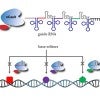
Rice University scientists enlist widely used cancer therapy systems to control gene expression in mammalian cells, a feat of synthetic biology that could change how diseases are treated.
In the most recent class in the Global Rice Empowers Academics and Training (GREAT) Project Feb. 11, local young adults with intellectual and developmental disabilities were treated to a fun-filled afternoon where international graduate students and Rice staff with the Office of International Students and Scholars (OISS) hosted a “Walk Through Latin America.”
Rice engineers discovered a 200-year-old technique called Fourier analysis can reveal crucial information about how a form of artificial intelligence called a deep neural network learns to perform tasks involving complex physics.
Rice bioengineers teamed up with tropical medicine experts from Tulane to invent a high-tech way to study the feeding behavior of mosquitoes. To eliminate the need for live volunteers, the system uses patches of "synthetic skin" made with a 3D bioprinter.
Whether they’re personally struck by or spared from natural disasters, people are more likely to distrust the government when their family and friends are victims, according to new research from Rice University.
Just as a puppeteer moves a puppet by manipulating its strings, estrogen receptors, which play a crucial role in breast cancer, work in similar ways when they facilitate the interaction between hormones and DNA, according to Rice scientists.
Rice University researchers already knew the atoms in perovskites react favorably to light. Now they’ve seen precisely how the atoms move when the 2D materials are excited with light. Their study this week in Nature Physics details the first direct measurement of structural dynamics under light-induced excitation in 2D perovskites.
Rice bioengineers and applied physicists, together with and colleagues at the University of Chicago and the University of Illinois Chicago, have unlocked the mechanism of the fastest synapses in the human body.
A previously hidden mechanism in the inner ear that helps mammals balance via the fastest-known signal in the brain, and researchers from Rice University, the University of Chicago and the University of Illinois Chicago have modeled a hidden mechanism in the inner ear that helps mammals balance via the fastest-known signal in the brain.
Chemists from Rice, UT Austin and Stanford have uncovered the long-sought mechanism of a light-driven process that creates solvated electrons, inherently clean chemical reactants that are attractive for green chemistry.
Christian Harvey, a first-year graduate student studying double bass performance, is the 2022-2023 Shepherd School-Houston Symphony Brown Foundation Community Embedded Fellow.
As anyone who has ever attended a cocktail party can tell you, shedding inhibitions makes you more talkative and possibly more prone to divulging secrets. Fungi, it turns out, are no different from humans in this respect.