

Cerium sidelines silver to make drug precursor
Rice scientists have developed a simplified method to make fluoroketones, a drug precursor that typically requires an expensive silver catalyst.
Cerium sidelines silver to make drug precursor
Rice scientists have developed a simplified method to make fluoroketones, a drug precursor that typically requires an expensive silver catalyst.
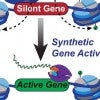
New CRISPR tech targets human genome’s complex code
Rice bioengineers harness the CRISPR/Cas9 system to program histones, the support proteins that wrap up and control human DNA, to manipulate gene activation and phosphorylation. The new technology enables innovative ways to find and manipulate genes and pathways responsible for diseases.

Rice chemist, alums named to Forbes 30 Under 30
Rice University chemist Julian West and four alumni have been named to the 10th annual Forbes 30 Under 30.

Vitamin boosts essential synthetic chemistry
Inspired by light-sensing bacteria that thrive near hot oceanic vents, synthetic chemists use vitamin B12 to catalyze valuable hydrocarbons known as olefins, or alkenes, useful precursor molecules for the manufacture of drugs and agrochemicals.
Once-discounted binding mechanism may be key to targeting viruses
Researchers detail subtle stabilizing effects in cells’ ability to recognize coronaviruses that compromise the immune system. The discovery could lead to new targets to prevent disease.
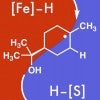
In a hurry to develop drugs? Here’s your cHAT
Rice University scientists develop cHAT to simplify the reduction of alkenes to more useful intermediate molecules for drugs and other useful chemical compounds.
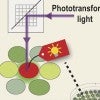
SPOTlight supercharges cell studies
Researchers develop a new method to isolate specific cells, and in the process find a more robust fluorescent protein.
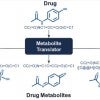
Deep learning gives drug design a boost
A computational tool created at Rice University may help pharmaceutical companies expand their ability to investigate the safety of drugs.

Heart attack damage reduced by shielded stem cells
Bioengineers and surgeons from Rice University and Baylor College of Medicine have shown in rodents that a four-week shielded stem cell treatment can reduce damage caused by a heart attack.

NSF renews Rice biological physics center
$12.9 million in funding backs Center for Theoretical Biological Physics research into mysteries at the intersection of biology and physics.
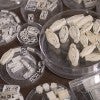
Laser-welded sugar: Sweet way to 3D-print blood vessels
Bioengineers keep cells alive in lab-grown tissues by creating networks of branching blood vessels from templates of 3D-printed sugar.
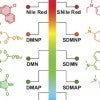
Rice lab turns fluorescent tags into cancer killers
Fluorophores with one oxygen atom replaced by a sulfur atom can be triggered with light to create reactive oxygen species within cancer cells, killing them.
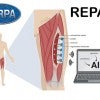
'Smart' wound-healing patch: DARPA awards $22 million grant
Rice University engineers are part of a team that's developing an 'intelligent' bandage to regrow muscle tissue for wounded soldiers.

CPRIT grant draws cell imaging specialist to Rice
The Cancer Prevention and Research Institute of Texas awards a $2 million grant to Rice to recruit physical chemist Anna-Karin Gustavsson, who will study the dynamics and distributions of single molecules in living cells through her development of sophisticated imaging systems.
CPRIT grant bolsters Rice biosciences
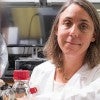
Rice University recruits synthetic biologist Caroline Ajo-Franklin with a $6 million grant from the Cancer Prevention and Research Institute of Texas to bolster the university’s cutting-edge Systems, Synthetic and Physical Biology program.