

Rice rises to No. 15 in US News rankings
Rice has risen to No. 15 among the nation’s top universities ranked in the latest edition of U.S. News & World Report’s “Best Colleges” guidebook.
Rice rises to No. 15 in US News rankings
Rice has risen to No. 15 among the nation’s top universities ranked in the latest edition of U.S. News & World Report’s “Best Colleges” guidebook.
People, papers and presentations for Sept. 12, 2022
Rice statisticians Katherine Ensor and Loren Hopkins and civil and environmental engineer Lauren Stadler are co-authors of a commentary in Nature Medicine that issues an urgent call to scale up wastewater monitoring to detect early signs of disease.
People, papers and presentations for Aug. 15, 2022
A paper co-authored by postdoctoral research associate Mohammad Salehi and President Reginald DesRoches, a professor of civil and environmental engineering and of mechanical engineering, was selected as the featured article for a recent volume of the journal Engineering Structures.
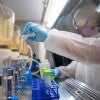
CDC names Houston Health Department, Rice a wastewater epidemiology Center of Excellence
A system to track COVID-19 through Houston’s wastewater became the basis of an epidemiology center that has now earned special designation from the U.S. government and $1 million in its first year of federal funding.

Strain-sensing smart skin ready to deploy
Carbon nanotubes’ natural fluorescence enables a method to detect high strain concentrations, which can lead to damage that threatens the integrity of critical infrastructure like aircraft, buildings, pipelines, bridges and ships.
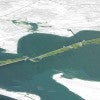
City, county and port support Galveston Bay Park study
Houston, Harris County, Port Houston and entrepreneur Joe Swinbank have chipped in for an engineering study of Galveston Bay Park, a chain of man-made islands that Rice University experts have proposed building as both a hurricane barrier and a 10,000-acre public park.
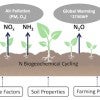
Agriculture emissions pose risks to health and climate
Rice researchers find the economic cost of emissions from agriculture and their risks to populations through air pollution and climate change.
SSPEED Center’s post-Harvey conference draws more than 150
More than 150 people attended the SSPEED Center’s April 28-29 conference on on “Post-Harvey Climate and Flood Impacts on the Built Environment.”

NSF awards 38 Graduate Research Fellowships to Rice students
The National Science Foundation has awarded 38 Graduate Research Fellowships to Rice University students.
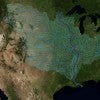
NSF backs study of Mississippi River’s response to climate change
Rice climate scientists and engineers are studying how climate change will impact Mississippi River flooding.

US News grad school rankings give high marks to Rice programs
A total of 19 graduate programs at Rice University rank among the nation's top 25 in their categories in the latest edition of U.S. News and World Report’s “Best Graduate Schools.”
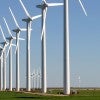
Wind, solar could replace coal power in Texas
A fraction of the wind and solar projects already proposed in Texas could eliminate the state’s remaining coal power plants and their emissions, according to Rice University engineers.
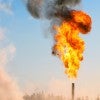
Gas flares tied to premature deaths
Rice engineers suggest that flaring of natural gas at oil and gas fields in the United States, primarily in North Dakota and Texas, contributed to dozens of premature deaths in 2019.

Inaugural class of Rice Innovation Fellows announced
The Provost’s Office and the Liu Idea Lab for Innovation & Entrepreneurship (Lilie) have announced the inaugural class of Rice Innovation Fellows, a program that will provide educational and financial support to the next generation of scientist- and engineer-led spinout ventures.
Environmental champions win Rice grants
The Rice University Sustainable Futures Fund backs six projects to help bolster the planet’s environmental health.