


In a corner of Rice University’s Fondren Library reserved for the special, rare and historic, a relatively new addition with centuries old roots is making an impression at Woodson Research Center.
Nameless Sound musicians performed an original score on Nanibah Chacon’s interactive installation following Danza Azteca Macuilxochitl's activation of...

Rice’s James Tour recently published an improved method to recover antimony from this electronic waste stream. ...

Three Rice faculty members from the Department of Earth, Environmental and Planetary Sciences have recently been honored with career awards, showcasin...

The Adventurous Electric Guitar Festival gathered players, composers and scholars to test the instrument’s next act....
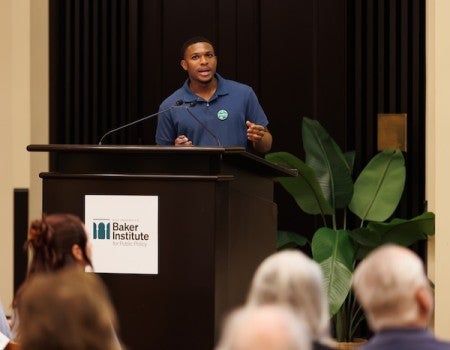
The Science and Technology Policy Program at Rice’s Baker Institute for Public Policy hosted a “science cafe” Oct. 13 to bring research to reality and...

The Doerr Institute for New Leaders at Rice has launched CoachRICE: Team Coaching, a new professional education program designed to help coaches, mana...
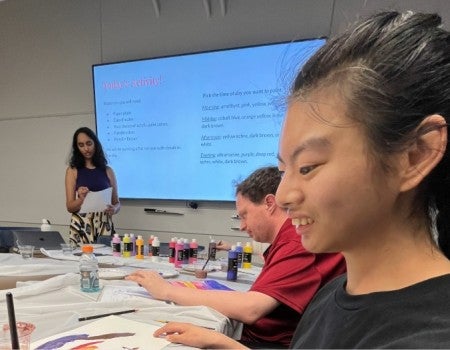
Graduate student Sayuri Jayawardena has started a Rice chapter of Lifelong Learning with Friends. ...

Scholars, curators and filmmaker Daphne Di Cinto gather at Rice to explore Black histories from Renaissance Italy to medieval Africa and Islamic world...
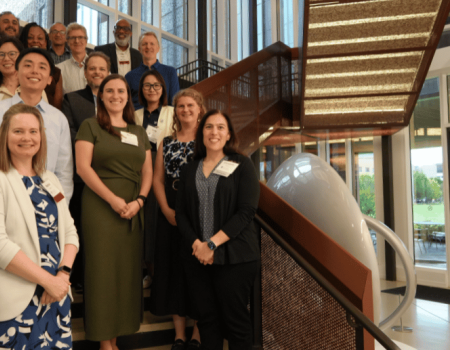
For the sixth fall in a row, Rice welcomed a new group of researchers to STaRT@Rice, giving emerging researchers both the skills and the support to gr...

Rice and the Houston Methodist Research Institute have signed a memorandum of understanding with LSE Health at the London School of Economics and Poli...

As the 2026-27 Aleko Endowed Artist, Julia Bullock curated an evening of song, chamber music and poetry celebrating the Harlem Renaissance....

Rice’s Yonglong Xie is one of 20 early-career scientists, mathematicians and engineers to receive a 2026 Packard Fellowship. ...
In a corner of Rice University’s Fondren Library reserved for the special, rare and historic, a relatively new addition with centuries old roots is making an impression at Woodson Research Center.

‘Outstanding advocate’ to lead Rice’s Office of International Students and Scholars
Beginning April 1, Kelia Hubbard will be at the helm of Rice’s OISS as associate vice provost for international education and director.

Rice celebrates 46th annual Original MLK Parade
Rice participated in the 46th annual Original MLK Parade thanks to a dedicated roster of staff, students and Sammy The Owl.

Rice celebrates Lunar New Year
The 2024 Lunar New Year Showcase, produced by the Chinese Student Association and the Vietnamese Student Association, featured K-pop numbers, singing, lion dances and other traditional performances.

Angela Berry Roberson ’90 discusses her path to Washington, D.C., at Gateway Speaker Series Event
Angela Berry Roberson ’90, senior advisor of the Departmental Office of Civil Rights for the U.S. Department of Transportation, spoke with students about her experiences at Rice and her path to Washington, D.C.

Rice hosts United Way campaign celebration, still time left to participate
Rice University President Reginald DesRoches and his wife Paula welcomed members of the Rice United Way campaign committee to their home for a reception to thank them for their efforts in support of the university’s annual campus initiative, which continues through the end of March.

Rice celebrates Black History Month with inaugural kickoff event
Rice University held its first ever kickoff event for Black History Month Feb. 7 themed “Called to Create: African Americans and the Arts.” More than 200 guests gathered at the Rice Memorial Center’s Grand Hall for an evening of music, dance, guest speakers, food and jubilation.

Wilson to rejoin Rice as head coach emeritus
Willis Wilson, the winningest basketball coach at Rice, has been appointed head coach emeritus by Rice Vice President and Director of Athletics Tommy McClelland.

In a drive to sustain academic excellence and ensure accessibility for all deserving students while expanding its competitiveness as a top global institution, Rice University announced undergraduate tuition rates for the next two years while bolstering efforts to provide the robust array of financial aid options available to students and their families.

Owls secure Edmonds’ 50th career win at South Florida
The Rice women’s basketball team’s 69-59 victory against the University of South Florida Feb. 7 marked 50 career wins for head coach Lindsay Edmonds.