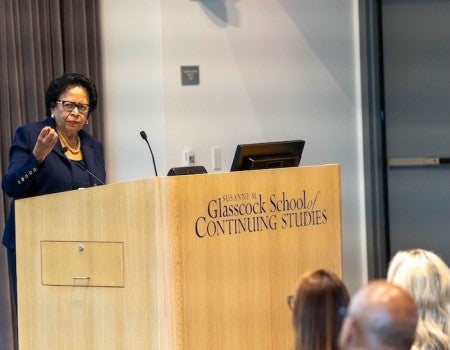
The Center for Philanthropy and Nonprofit Leadership at Rice’s Susanne M. Glasscock School of Continuing Studies welcomed nonprofit leaders from acros...
The Olivier Award-nominated play traces the rise and fall of the Houston-based energy trading giant, translating complex financial systems into a fast...
New consumable hemp rules from the Texas Department of State Health Services are officially in effect, and the biggest change comes down to how THC is...
For more than a decade, Rice’s Frederi Viens has been studying Lake Chad, a vast freshwater lake in west-central Africa that borders Nigeria, Niger, C...
The Center for Energy Studies at Rice’s Baker Institute for Public Policy and the University of Houston Energy Transition Institute are launching a st...
A delegation of researchers from Rice’s WaTER Institute traveled to Argentina’s Neuquén province this month to help address a pressing question facing...
Rice’s open enrollment period for employee benefit plans will run from April 3-17. To give employees a way to better explore their benefits options, t...
Rice's Office of Sustainability invites the campus community to join the third annual Earth Month Kick-Off Festival from 12:30-3:30 p.m. April 1 at th...
Rice continues to strengthen its position as a leader in innovation, rising to No. 66 in the 2025 Top 100 U.S. Universities List for utility patents, ...
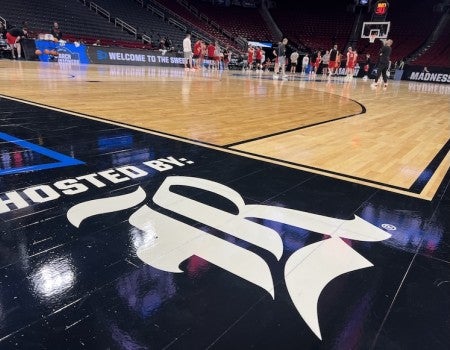
Rice once again found itself at the center of the college basketball world, serving as the official host institution for the NCAA Men’s Basketball Sou...
As employers evaluate whether remote-work arrangements are a viable longterm option, they should consider that these seemingly innocuous arrangements can trigger tax issues for both workers and their employers, according to an expert from Rice University’s Baker Institute for Public Policy.
The institution of slavery caused centuries of harrowing misery, triggered wars and left a searing legacy of racial injustice, but many of the artifacts and records pertaining to slavery’s history have been understudied or altogether forgotten.
A thin coating of the 2D nanomaterial hexagonal boron nitride is the key ingredient in a cost-effective technology developed by Rice University engineers for desalinating industrial-strength brine.
U.S. Army Futures Command Lt. Gen. Thomas Todd III and U.S. Rep. Dan Crenshaw, R-Texas, joined Rice President David Leebron, Provost Reggie DesRoches and Army and Rice dignitaries for the Oct. 30 opening ceremony of the Rice University National Security Research Accelerator (RUNSRA) laboratories in Dell Butcher Hall.