

Rice begins search for new director of athletics
A search firm has been selected for the recruiting effort for the next Director of Athletics at Rice University.
Rice begins search for new director of athletics
A search firm has been selected for the recruiting effort for the next Director of Athletics at Rice University.

Finance and Administration announces personnel and organizational updates
As Rice University continues its enhancement of services to all Owls, the Division of Finance and Administration recently implemented personnel and departmental structure updates to better serve the campus community.

'23 Bayou Bucket Classic to be broadcast on NFL Network
The battle for the Bayou Bucket will once again be broadcast nationally as the NFL Network will host coverage of the 42nd Bayou Bucket Classic presented by H-E-B on Sept. 9.
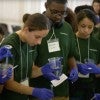
‘Connectrix’ mentors high school youth for college life
Teenagers are flocking to the Rice University campus this month to prepare for college life. No, it is not the famous O-Week; instead, it is Connectrix, an initiative aimed at preparing high school underclassmen for their future educational endeavors.

Light-activated molecular machines get cells ‘talking’
Rice University scientists have used light-activated molecular machines to induce cell-to-cell calcium signaling, revealing a powerful new strategy for drug design. This technology could lead to improved treatments for people with heart problems, digestive issues and more.

Reporters broadcast live, on-the-scene, inside living cells
Synthetic biologists from Rice University and Princeton University have demonstrated “live reporter” technology that can reveal the workings of signaling networks in living cells with far greater precision than current methods. The first-of-its-kind reporting tool can show how quickly signaling networks respond and how responses vary from cell to cell in time and space.
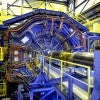
Rice U. physicist to lead world’s longest-running nuclear collider experiment
Rice U. Frank Geurts has been named co-spokesperson of STAR, the world’s longest-running particle collider experiment.

Rice U.’s Songtao Chen wins NSF CAREER Award
Songtao Chen, an assistant professor of electrical and computer engineering at Rice University, has won a prestigious National Science Foundation CAREER Award to advance the development of quantum networks by leveraging point defects in silicon.

Owls officially soar into American Athletic Conference
Rice Athletics officially joined the American Athletic Conference July 1 and kicked off the “Ascend Together” campaign.

Ruth Simmons joins 'CBS Mornings' to discuss affirmative action ruling
Ruth Simmons, President’s Distinguished Fellow at Rice, joined “CBS Mornings” on Friday, June 30, to discuss the impact the Supreme Court’s ruling on affirmative action will have and how schools can continue to work towards diverse student bodies.
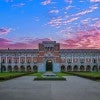
Rice remains committed to diverse student body despite Supreme Court ruling
Like many other colleges and universities, Rice has closely followed the affirmative action cases before the Supreme Court and begun to prepare for various outcomes.

Study: Pandemic FOMO had mental health consequences for older adults
During the COVID-19 pandemic, fear of missing out (FOMO) on social activities may have negatively affected the mental health of adults at high risk of serious disease, according to a new study from Rice University and Baylor University.

President gives first-year update, discusses upcoming academic year
As we approach the one-year mark of my presidency, I want to share a summary and update on important developments that have taken place over the past 12 months and speak to my plans for the coming academic year.

Rice University’s Susanne M. Glasscock School of Continuing Studies has announced Kristen Schlatre as its new assistant dean for professional and corporate programs.
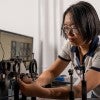
NeuWS camera answers ‘holy grail problem’ in optical imaging
Engineers from Rice and the University of Maryland have created technology that could allow cameras to "see" through fog, smoke, driving rain, murky water, skin, muscle and other light-scattering obstructions.