

Rice U. lab develops sustainable chemical synthesis tool; Julian West derives alcohol products from epoxides
Rice U. lab develops sustainable chemical synthesis tool; Julian West derives alcohol products from epoxides

Team OR Lights wins Rice’s 2023 Engineering Design Showcase
Team OR Lights captured the top prize at this year’s Huff OEDK Engineering Design Showcase, presented annually by Rice University’s George R. Brown School of Engineering and Oshman Engineering Design Kitchen (OEDK).

Sensor system could decrease fall risk for older adults
A team of Rice University engineering students designed a fall-risk assessment system that enables doctors to create personalized risk-management strategies for patients based on their individual movement patterns at home.
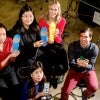
Rice U. engineering students’ brace puts patients first
For those suffering from rib flaring associated with congenital deformations of the chest wall that cause it to jut out or cave in, a team of Rice University engineering students has come up with a potential solution.
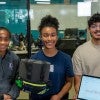
Rice U. students engineer socks for on-the-go neuropathy treatment
A wearable electrical-stimulation and vibration-therapy system designed by Rice University engineering students might be just what the doctor ordered for people experiencing foot pain and balance loss due to diabetic neuropathy.

Rice U. engineering students aim to shed better light on surgeries
A team of Rice University engineering students designed a tunable lighting system that would allow surgeons to better illuminate their working area without having to handle equipment or wear headlamps.
Strong ultralight material could aid energy storage, carbon capture
Rice U. materials scientists and collaborators at the University of Maryland showed that fine-tuning interlayer interactions in a class of 2D polymers can determine the materials’ loss or retention of desirable mechanical properties in multilayer or bulk form.
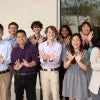
Rice. U. engineering opens diversity, equity and inclusion outreach center
Rice University’s George R. Brown School of Engineering has inaugurated the Diversity, Equity and Inclusion Outreach Center dedicated to improving recruitment, retention and support for student populations historically excluded from STEM.

Rice’s Todd Treangen wins NSF CAREER Award
Todd Treangen wins NSF CAREER Award to develop a comprehensive computational platform for detecting yet-unseen microbial pathogens.
Eco-efficient cement could pave the way to a greener future
Rice U. scientists develop process to remove toxic heavy metals from coal fly ash, making for greener, stronger concrete.

Protein-based coating could keep fruits and vegetables fresh longer
Rice University materials scientist Muhammad Rahman has won a National Science Foundation grant to develop a sustainable, low-cost coating to extend the shelf life of fruits and vegetables.

Upgraded tumor model optimizes search for cancer therapies
Rice U. bioengineers have developed an upgraded tumor model that houses bone cancer cells beside immune cells inside a 3D structure engineered to mimic bone and, through research using the model, found that the body’s immune response can make tumor cells more resistant to chemotherapy.

Fats help tag medical implants as friend or foe
Rice University bioengineer Omid Veiseh and collaborators found that lipid deposition on the surfaces of medical implants can play a mediating role between the body and implants, knowledge that could help scientists develop biomaterials or coatings for implants that could reduce malfunction rates.

Rice U. at CERAWeek 2023: Energy, health care and computing top research agenda
Rice U. representatives discussed the vision guiding the university’s research agenda during a panel discussion at CERAWeek, the leading annual energy conference taking place in Houston this week.

Rice U. hosts international women’s STEM research program
Rice University is host to a women’s leadership and STEM research program that welcomes students from Japan and Taiwan for an immersive five-week internship.