Rice University engineers’ have created a device that turns sunlight into hydrogen with record-breaking efficiency by integrating next-generation halide perovskite semiconductors with electrocatalysts in a single, durable, cost-effective and scalable device.
Rice University’s Michael Wong was named a fellow to the Royal Society of Chemistry, the oldest chemical society in the world, whose mission is to “advance excellence in the chemical sciences.”
Rice University bioengineer Gang Bao and his team have won a grant from the National Institutes of Health to address critical questions surrounding the safety and efficacy of using gene editing to treat sickle cell disease.
Rice University chemist Han Xiao has won a $3.2 million research project (R01) grant from the National Cancer Institute to develop the first tissue-specific epigenetic inhibitor drug to treat bone metastasis.
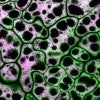
A new study by Rice University bioscientists explains how structures inside plant cells collaborate to fuel germination. The findings could shed light on corresponding mechanisms in human cells.
Rice University scientists have used light-activated molecular machines to induce cell-to-cell calcium signaling, revealing a powerful new strategy for drug design. This technology could lead to improved treatments for people with heart problems, digestive issues and more.
The launch of a new social media app by Facebook parent-company Meta yesterday has brought renewed attention to the social media landscape. Rice University Professor and computing expert Moshe Vardi is available to comment on the Meta-Twitter rivalry and its potential impact.
Songtao Chen, an assistant professor of electrical and computer engineering at Rice University, has won a prestigious National Science Foundation CAREER Award to advance the development of quantum networks by leveraging point defects in silicon.
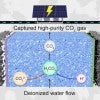
New carbon capture technology developed by Rice University engineers can generate a continuous, high-purity carbon dioxide stream from diluted, or low-concentration, gas streams using only electricity and a water-and-oxygen-based reaction.
Retracing nature’s steps, Rice University engineer Xue Gao and her team mapped out the full series of enzyme-powered reactions a marine fungus uses to produce a complex molecule with anticancer properties. In the process, the Gao lab uncovered the first fungal enzyme of its kind known to break an amide bond.
The largest long-term standardized camera-trap survey to date finds that human activity impacts tropical mammals living in protected areas and sheds light on how different species are affected based on their habitat needs and anthropogenic stressors.
Rice U. chemist Anatoly Kolomeisky has won a National Science Foundation award to study the role of heterogeneity in chemical and biological processes.
Rice University postdoctoral fellow Hannah Ballard has won a three-year grant from the National Institutes of Health to investigate the link between the transition to menopause and Alzheimer’s disease.