Rice University professors Thomas Killian and Marek Kimmel are elected fellows of the American Association for the Advancement of Science, a distinction that honors scientists, engineers and innovators whose efforts on behalf of science and its applications are scientifically or socially distinguished.
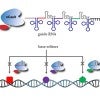
Just as a puppeteer moves a puppet by manipulating its strings, estrogen receptors, which play a crucial role in breast cancer, work in similar ways when they facilitate the interaction between hormones and DNA, according to Rice scientists.
Kory Evans, an assistant professor of biosciences at Rice University, has won a prestigious National Science Foundation CAREER Award to study shape change in the skull of spiny ray-fin fishes across their evolutionary history.
A new approach to the study of amyloid-beta, a peptide associated with Alzheimer’s disease, has led Rice University scientists to findings that could have a significant impact on the understanding and potential treatment of the disease.
Rice chemist Han Xiao and Stanford researcher Zhen Cheng have developed a tool for noninvasive brain imaging that can help illuminate hard-to-access structures and processes. Their small-molecule dye is the first of its kind that can cross the blood-brain barrier, allowing researchers to differentiate between healthy brain tissue and a glioblastoma tumor in mice.
Rice University bioengineer Jerzy Szablowski has won a prestigious DARPA Young Faculty Award to identify nongenetic drugs that can temporarily enhance the human body’s resilience to extreme cold exposure.
As anyone who has ever attended a cocktail party can tell you, shedding inhibitions makes you more talkative and possibly more prone to divulging secrets. Fungi, it turns out, are no different from humans in this respect.