
Rice physicist shares grant to advance imaging
The lab of physicist Junichiro Kono will share in a $1 million grant from the Chan Zuckerberg Initiative to improve imaging of proteins, cells and tissues.
Rice physicist shares grant to advance imaging
The lab of physicist Junichiro Kono will share in a $1 million grant from the Chan Zuckerberg Initiative to improve imaging of proteins, cells and tissues.
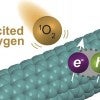
Chemists get peek at novel fluorescence
Rice chemists find a second level of fluorescence in single-walled carbon nanotubes. The phenomenon may be useful in solar energy and optoelectronic applications.

Rice finds path to nanodiamond from graphene
Rice University researchers expand their theory on converting graphene into 2D diamond, or diamane.
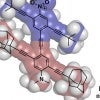
Rice rolls out next-gen nanocars
Rice researchers continue to advance the science of single-molecule machines with a new lineup of nanocars, in anticipation of the next international Nanocar Race in 2022.

A trillion turns of light nets terahertz polarized bytes
Nanophotonics researchers at Rice University, the Polytechnic University of Milan and the Italian Institute of Technology have demonstrated a novel technique for modulating light at terahertz frequencies with plasmonic metasurfaces.
NSF renews Rice-based NEWT Center for water treatment
The National Science Foundation renews the Rice-based Nanotechnology Enabled Water Treatment Center for five years. The Engineering Research Center is dedicated to enabling access to clean water around the world.
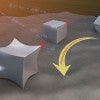
Shape matters for light-activated nanocatalysts
Points matter when designing nanoparticles that drive important chemical reactions using the power of light, according research from Rice University's Laboratory for Nanophotonics.
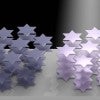
Ambient light alters refraction in 2D material
Microscopic crystals in tantalum disulfide have a starring role in what could become a hit for 3D displays, virtual reality and even self-driving vehicles.
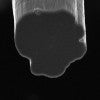
No limit yet for carbon nanotube fibers
Rice University researchers report advances in their quest to make the best carbon nanotube fibers for industry.

Purifying water with a partly coated gold nanoparticle
Rice's Naomi Halas has collaborated with Yale University engineers on the creation of a light-activated nanoparticle for clearing water of pollutants. The research is part of an effort by NEWT, the Rice-based Nanosystems Engineering Research Center for Nanotechnology-Enabled Water Treatment.
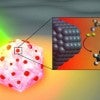
Fluorocarbon bonds are no match for light-powered nanocatalyst
Rice University engineers have created a light-powered catalyst that can break the strong chemical bonds in fluorocarbons, a group of synthetic materials that includes persistent environmental pollutants.
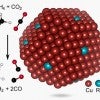
Rice University engineers have created a light-powered nanoparticle that could shrink the carbon footprint of syngas producers.