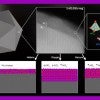
The Rice lab of nanotechnology pioneer Naomi Halas has uncovered a transformative approach to harnessing the catalytic power of aluminum nanoparticles by annealing them in various gas atmospheres at high temperatures.
Rice computer scientist Nai-Hui Chia has won a National Science Foundation CAREER Award to develop a new theoretical framework to facilitate the development of efficient quantum algorithms for a range of problems in quantum physics and computer science as well as enhance the security of quantum cryptography.
Yonglong Xie, assistant professor of physics at Rice University, has been awarded a Faculty Early Career Development (CAREER) Award from the National Science Foundation (NSF). The $888,555 grant over five years will support Xie’s research into harnessing magnons, quantum mechanical wavelike objects in magnetic materials, to create synthetic matter and develop next-generation quantum devices and sensors.
Rice chemist James Tour was named to the National Academy of Engineering, one of the highest professional distinctions accorded “in recognition of distinguished contributions” to the field.
Rice University chemist Bruce Weisman’s three-decade career in nanocarbons research has been honored with the namesake award of the Rice colleague who founded the field and sparked Weisman’s interest in it.
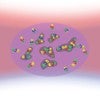
A team of Rice researchers mapped out how flecks of 2D materials move in liquid ⎯ knowledge that could help scientists assemble macroscopic-scale materials with the same useful properties as their 2D counterparts.
Rice scientists have discovered a first-of-its-kind material, a 3D crystalline metal in which quantum correlations and the geometry of the crystal structure combine to frustrate the movement of electrons and lock them in place.
Rice scientists along with collaborators at Durham University prolonged quantum behavior in an experimental system nearly 30-fold by using ultracold temperatures and special laser wavelengths to generate a “magic trap” that delays the onset of quantum decoherence.
A new study from Rice’s RAMBO laboratory and collaborators suggests the magnetism of phonons, collective atomic vibrations, is enhanced by electronic pathways.
Rice recently hosted the first International Workshop on Quantum Vacuum in Matter, an event that brought together leading experts in the field from around the world to discuss recent advances, discoveries and research priorities.
Naomi Halas, a pioneering researcher in the fields of nanophotonics and plasmonics at Rice University, has been awarded the 2024 Mildred Dresselhaus Prize for Nanoscience/Nanomaterials from the American Physical Society.
An interdisciplinary team of Rice University scientists has won a $1.9 million National Science Foundation grant for research on materials that could serve as the basis for next-generation energy-efficient computing devices.
Rice alumnus Louis Brus (’65) has been awarded the Nobel Prize in Chemistry alongside Moungi Bawendi and Alexei Ekimov for the “discovery and development of quantum dots.”