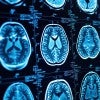
As artificial intelligence plays an increasingly prominent role in decoding DNA, tracking pathogens and accelerating drug discovery, the line between real capability and hype can be unclear. Rice experts can provide clear, technically grounded perspectives on how these tools are meaningfully advancing disease detection, public health preparedness and treatment design.
Rice’s Alumni Weekend welcomed alumni, students, faculty, staff and the community for a weekend of festivities, fellowship and football Nov. 6-9. Blending the spirit of homecoming and a reunion, Owls reconnected and contemplated the past, present and future of the beloved institution.
As colleges, universities and policymakers grapple with how to remain relevant in an era of rapid technological change, reassess the value of a degree and reinvent what higher education means for today’s learners, Caroline Levander is uniquely positioned to offer authoritative insight.
Rice researchers and collaborators developed a computational tool that can help identify which specific types of cells in the body are genetically linked to complex human traits and diseases, including in forms of dementia such as Alzheimer’s and Parkinson’s.
Vice President for Global Strategy Caroline Levander argued that higher education is facing a pivotal moment — one in which institutions must decide whether to preserve the past or build for the future.
LLMs and the Brain, a symposium featuring researchers from Rice, Baylor College of Medicine, the University of Texas, the Georgia Institute of Technology, the University of Montreal and other institutions explored the intersection between neuroscience and AI. The conversation around brain research extends beyond the university and is unfolding at the state level. On Nov. 4, Texas voters will decide on Proposition 14, which would fund the Dementia Prevention and Research Institute of Texas (DPRIT) with $3 billion over 10 years, creating the largest state-funded dementia research program in the country.
The Future of AI and Behavioral Health Workshop, a joint effort of Rice and UTHealth Houston, explored the intersection of artificial intelligence and behavioral health and served to spotlight the launch of UTHealth Houston’s new School of Behavioral Health Sciences.
One year after launching its ambitious 10-year strategic plan, Momentous: Personalized Scale for Global Impact, Rice is already seeing the transformative results of its bold vision.
Bringing together scholars across disciplines and national contexts, the event explored how emerging technologies affect reproductive health, ethical practice and the meaning of care itself.
OpenStax, an educational initiative of Rice, announced that it has surpassed $3 billion in cumulative student savings since 2012 — nearly tripling the amount from just four years ago. The milestone underscores the organization’s continued impact on educational access and the growing demand for adaptable, high-quality learning materials.
Rice’s Vice President for Global Strategy guided the discussion through themes that define the current higher education landscape and panelists highlighted how access and equity remain central concerns, particularly in light of shifting student loan policies, affirmative action rulings and changing immigration dynamics.
Rice has named David Sholl, an internationally recognized expert in research strategy, clean energy and scientific leadership, as its new executive vice president for research.
Landing a job traditionally meant polishing a resume and sitting across from a hiring manager; today, the first “person” to evaluate you might not be a person at all — it could be a chatbot powered by artificial intelligence.